A family sends two birth charts to a free matching tool. It returns 24 out of 36. Then they pay for a longer report that describes the same pair as both difficult and promising. The mismatch isn't unusual: a score can summarize one traditional set of factors without explaining the whole relationship or when a marriage might happen.
The best astrology app for marriage prediction depends on what you're asking. A Guna Milan score is a compatibility check, not a marriage-timing analysis. A timing claim needs a clear method, a way to handle uncertainty, and a record you can check against lived events. I compare the tools below on what they calculate, whether they support that kind of review, and who they suit. Anvaya's free calibration questions offer a way to see what a chart-based reading that can be checked against past events looks like.
Table of Contents
- 1. Anvaya
- 2. AstroSage
- 3. AstroTalk
- 4. Astroyogi
- 5. InstaAstro
- 6. Clickastro
- 7. AstroMatch
- 8. GaneshaSpeaks
- 9. Melooha
- 10. Karmik
- How the 10 apps compare on matching, timing, and transparency
- Choose the App That Shows Its Work
1. Anvaya
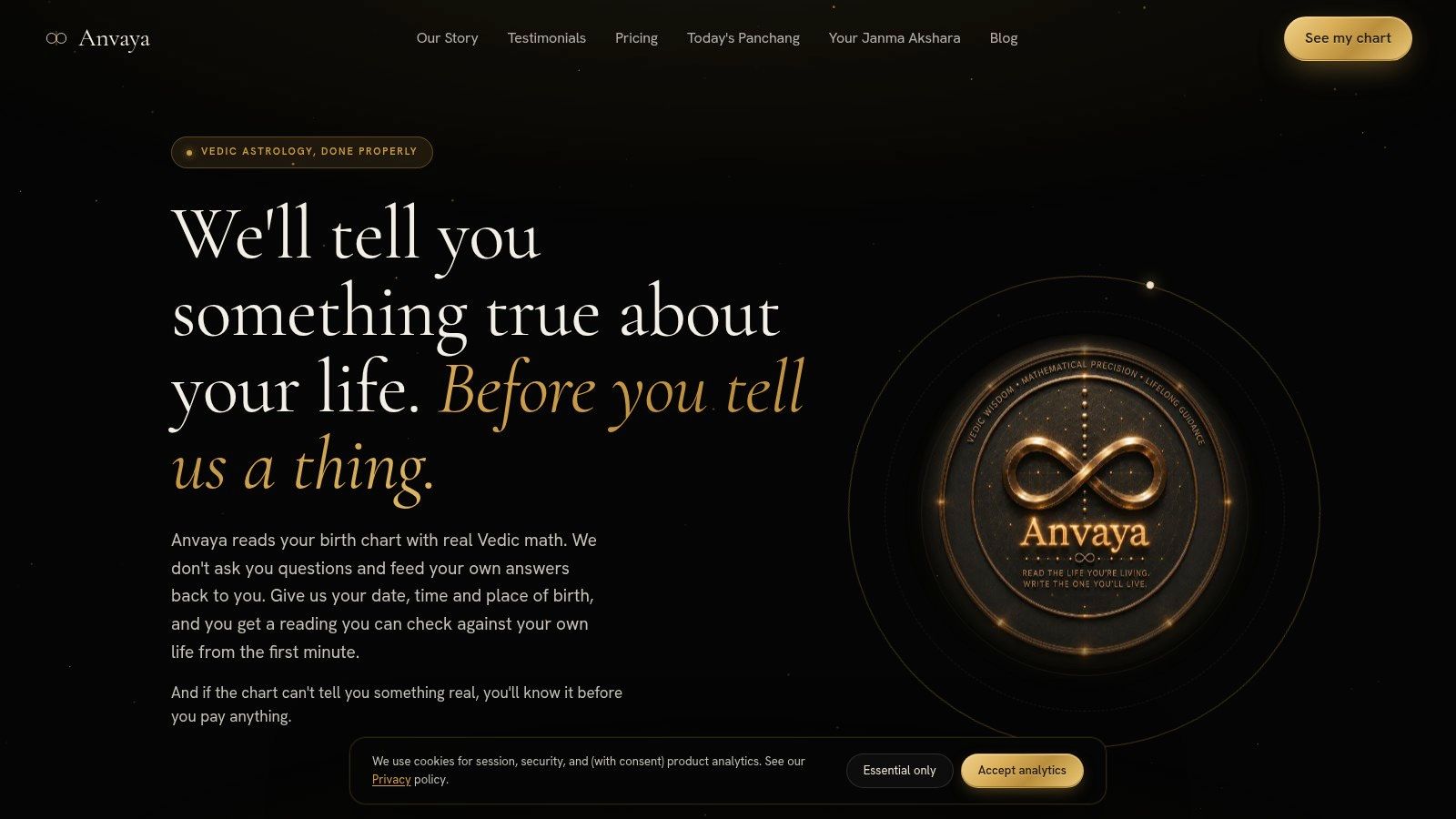
Anvaya is built for readers who want more than a one-time matching score. It calculates a classical Parashari Vedic chart from your birth details, then presents a Samhita, a structured reading designed to be revisited as you confirm details of your life. Before adding paid content, free Pramāṇa questions let you check whether chart-based interpretations fit specific periods in your past. Each interpretation carries a confidence indicator, including when the signal is unclear.
For couples, Sambandha supports two-chart relationship analysis, including Ashtakoota Guna Milan and Mangal Dosha checks. That gives you more context than a single score, but the two concepts still answer different traditional questions. An Ashtakoota total isn't a complete relationship assessment, and a Dosha check isn't a marriage verdict. Anvaya preserves dated readings and updates so you can review what it said rather than relying on a rewritten summary.
Practical rule: A timing claim deserves more trust when you can see the method, its uncertainty, and what it said before the event.
Anvaya also includes tools such as Panchang, Janma Akshara, Muhurta, Sangati, and Pravāha. It's a classical Vedic platform, not a general horoscope feed. Accurate birth details matter, especially birth time, and astrology is an interpretive practice, not a scientifically established way to predict marriage outcomes. The core Samhita is paid, with current terms on the Anvaya pricing page.
Best for: Couples who want chart-based analysis with calibration, confidence labels, and a reviewable record.
Trade-off: It asks for accurate birth data and a willingness to engage with a detailed reading, rather than offering only a quick score.
2. AstroSage
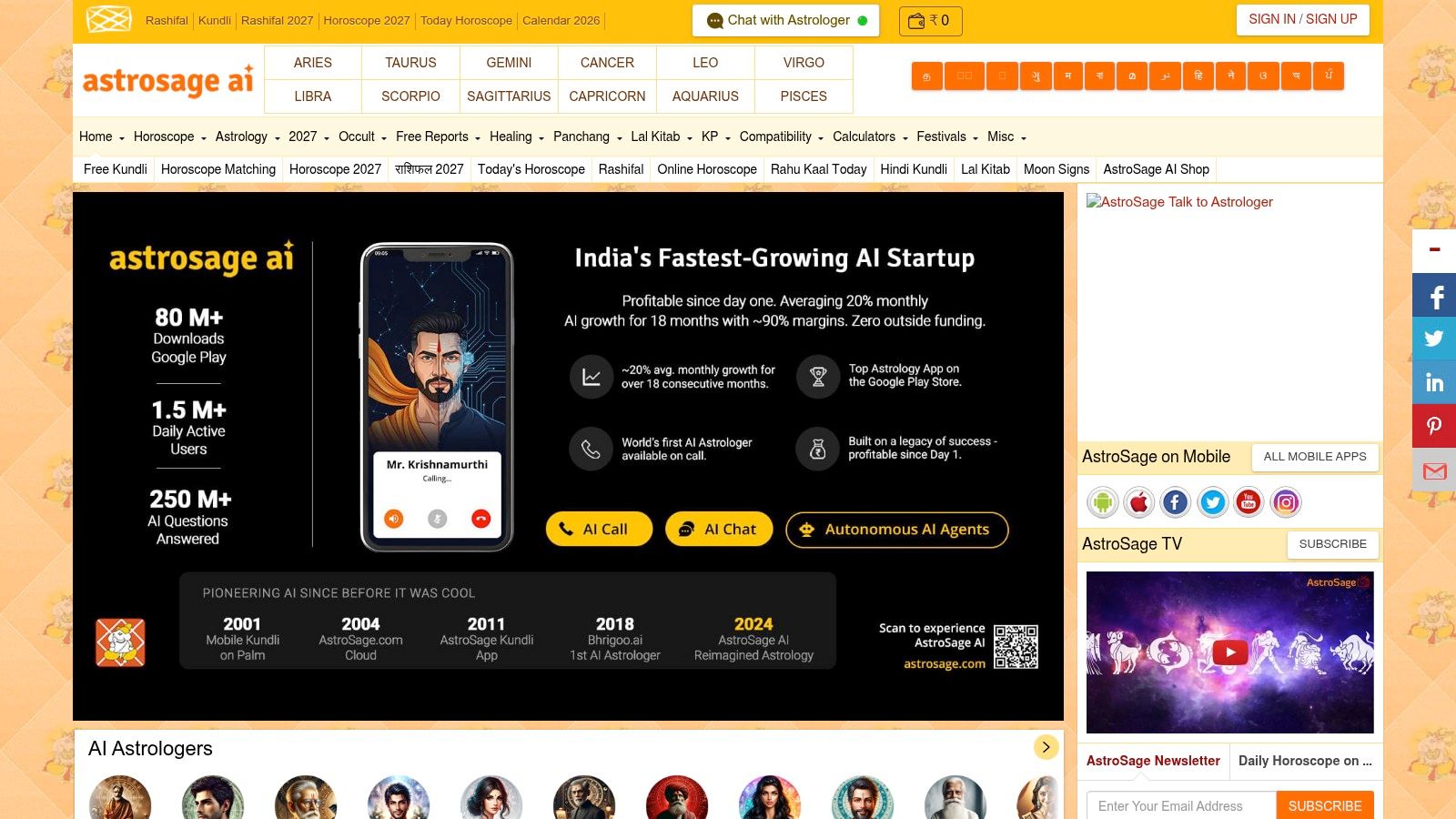
AstroSage is a practical starting point if you want free Kundli matching alongside a wider set of Vedic chart tools. You can compare two people's birth details, review Guna Milan and Mangal Dosha information, and explore chart settings. The added chart detail can help more experienced readers, though newcomers may find the technical material harder to interpret.
Paid marriage reports sit apart from the free matching tool. That's a useful distinction to keep in mind: a compatibility score can be a first screen, but it doesn't by itself explain timing or the broader pattern of a relationship. For a plain-language explanation of what online matching does and doesn't tell you, see this guide to Kundli matching online.
Best for: People who want to try free matching before deciding whether they need a longer interpretation.
Trade-off: More chart data doesn't automatically make the result easier to use. You'll still need to distinguish a matching score from a separate timing analysis.
3. AstroTalk
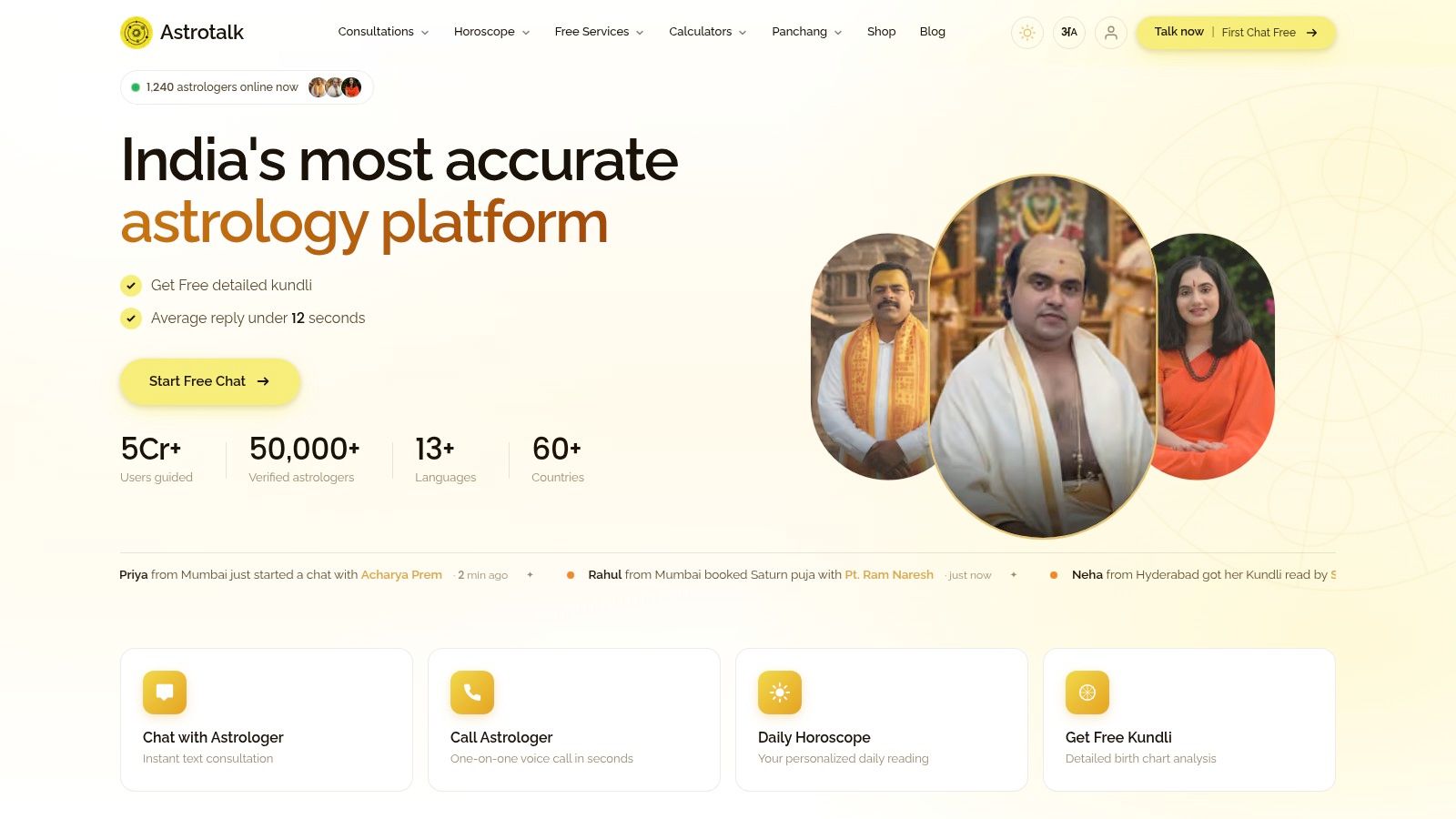
AstroTalk pairs an online Kundali matching tool with paid chat and call consultations. Its matching report includes an Ashtakoota score and Mangal Dosha analysis. If the report raises a question, you can follow it with a conversation rather than trying to interpret every chart detail on your own.
That format suits readers who want a human response, but a live conversation isn't the same as a reviewable record. Before paying for a consultation, write down the specific question you want answered. Ask the astrologer to explain which chart factors support the view and where the reading is uncertain. A confident answer without a clear basis can feel personal without being easy to assess later.
Best for: Users who prefer to discuss a free matching result with an astrologer.
Trade-off: Consultation charges vary, and longer sessions can add up. AstroTalk offers several kinds of astrology and divination, so it may not suit readers looking only for classical Vedic work.
4. Astroyogi
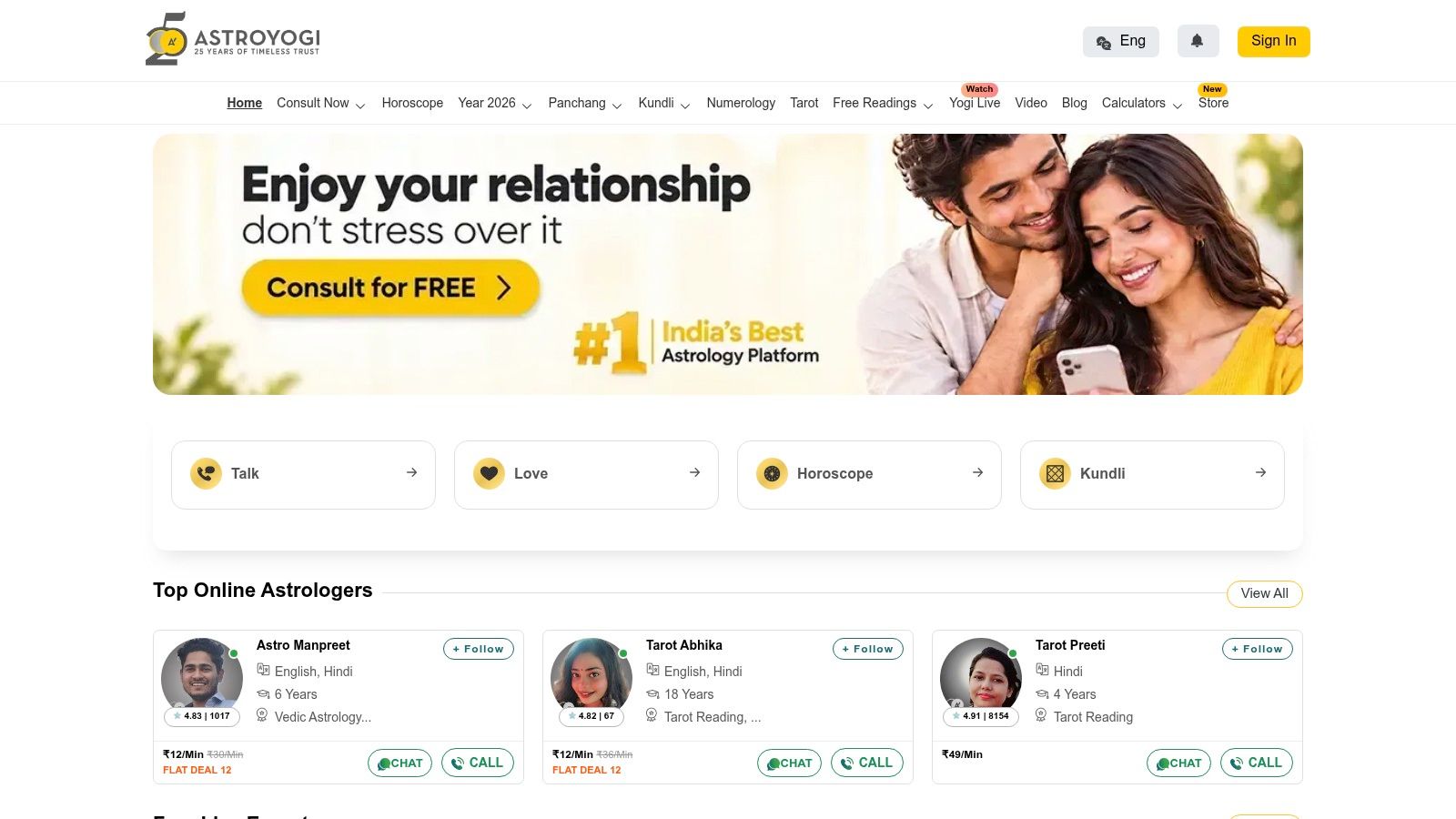
Astroyogi combines free Kundli matching with access to astrologers for follow-up questions. The matching report includes Guna Milan, an Ashtakoot score, a Lagna chart, and dosha information. Showing the categories behind a total is more useful than displaying a score alone, because the component results can tell you what the software has really compared.
A free compatibility report still isn't a detailed prediction of when marriage might happen. If timing is your main question, treat the matching result as a separate part of the analysis and ask how the timing claim is derived. Paid consultations give you a way to ask follow-up questions, though the cost depends on the astrologer and service.
Best for: People who want an automated report and the option of personal guidance.
Trade-off: Its broad range of services may feel less focused than a tool built specifically for two-chart relationship work.
5. InstaAstro
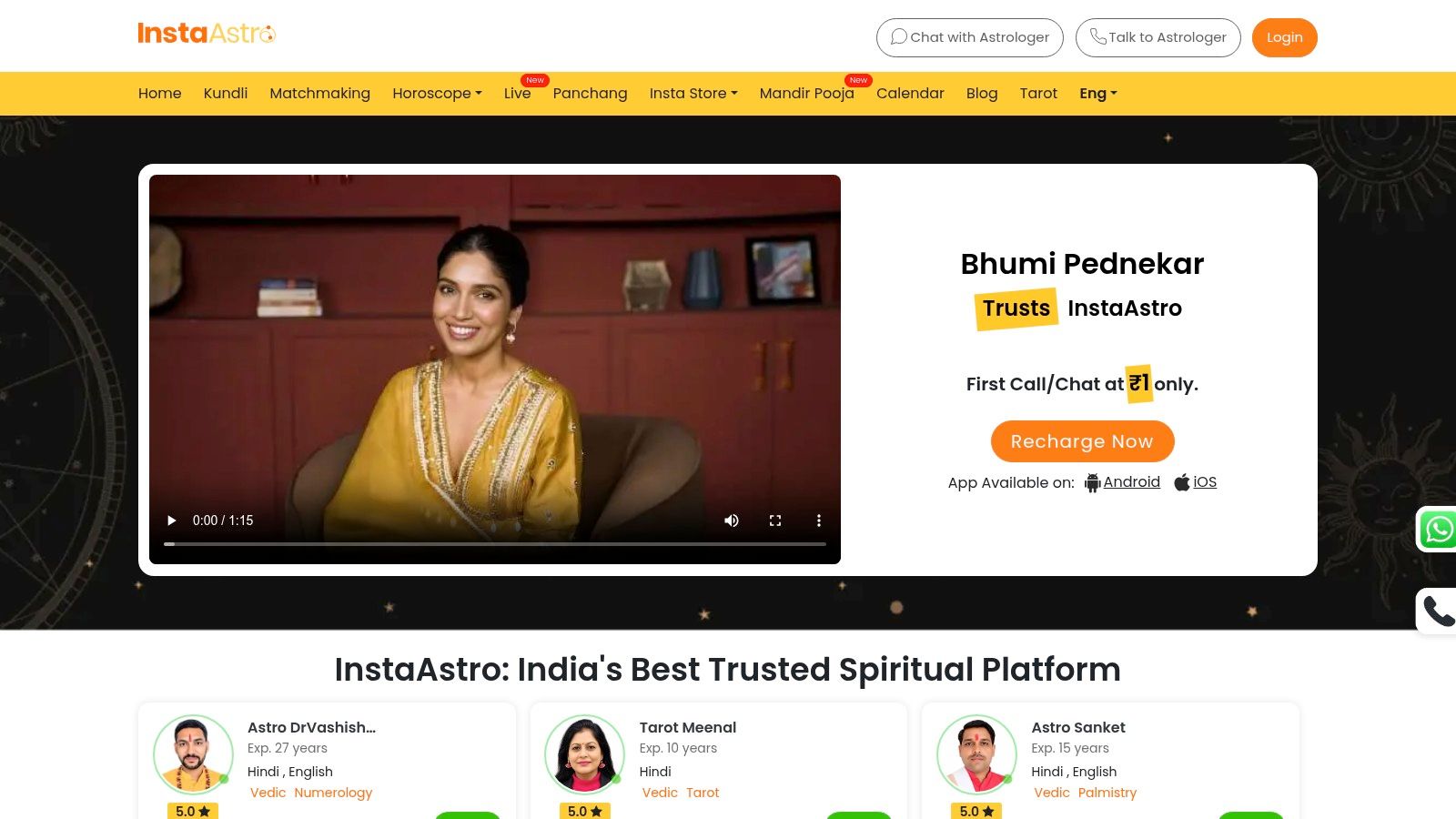
InstaAstro offers free online Kundli matching, with optional paid reports and astrologer access. The free result gives you an initial compatibility check, while the paid Kundli Matching Report is described as covering planetary positions and possible relationship challenges as well as compatibility. That can provide more context than a Guna score by itself.
Check the exact product details before buying. Similarly named matchmaking products can differ in what they include, and the more detailed report is described as app-only. If you want a nuanced reading, look for explanations of how each factor was assessed rather than treating traditional compatibility language as a simple yes or no.
Best for: Users who want a free first step and the option to buy a more detailed compatibility report.
Trade-off: You may need to compare report descriptions carefully to understand what you're purchasing.
6. Clickastro
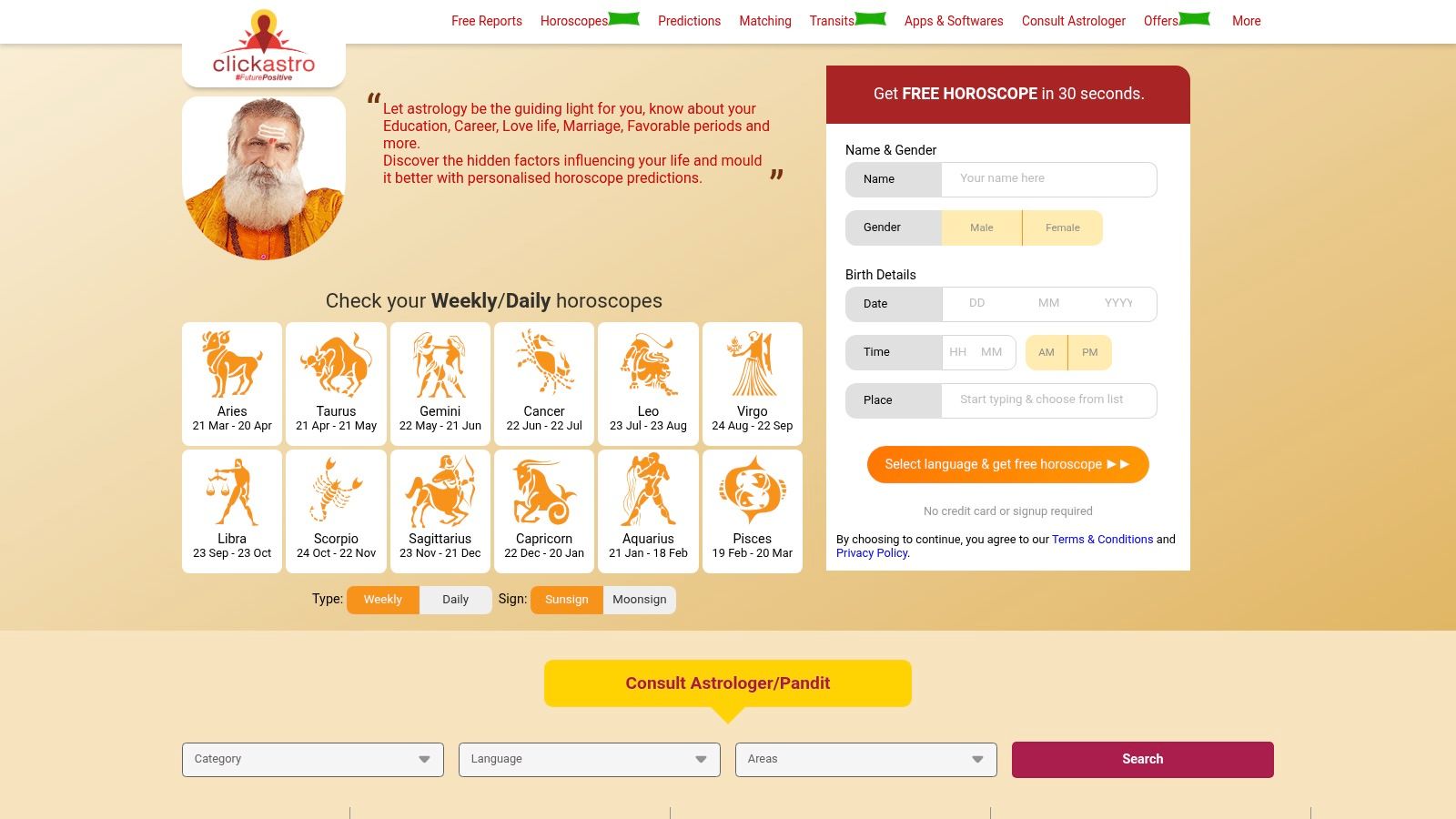
Clickastro offers a basic free compatibility result and paid reports with different levels of detail. Some focus on traditional matching factors such as birth-star matching, doshas, and Dasa Sandhi. A separate couple's horoscope report covers broader relationship themes, including emotional, mental, physical, and practical areas.
That range is helpful if you know which kind of reading you want. It can also make product selection confusing: compare the report contents before choosing, rather than assuming similarly named options answer the same question. The detailed readings are software-generated, so they aren't the same as a live discussion with a practitioner. Accurate birth details matter, especially when the calculation depends on birth time.
Best for: Readers who want a choice between traditional matching factors and broader couple analysis.
Trade-off: Several report options can make it hard to identify the right product, and a detailed automated report may not provide the judgment of a conversation.
7. AstroMatch
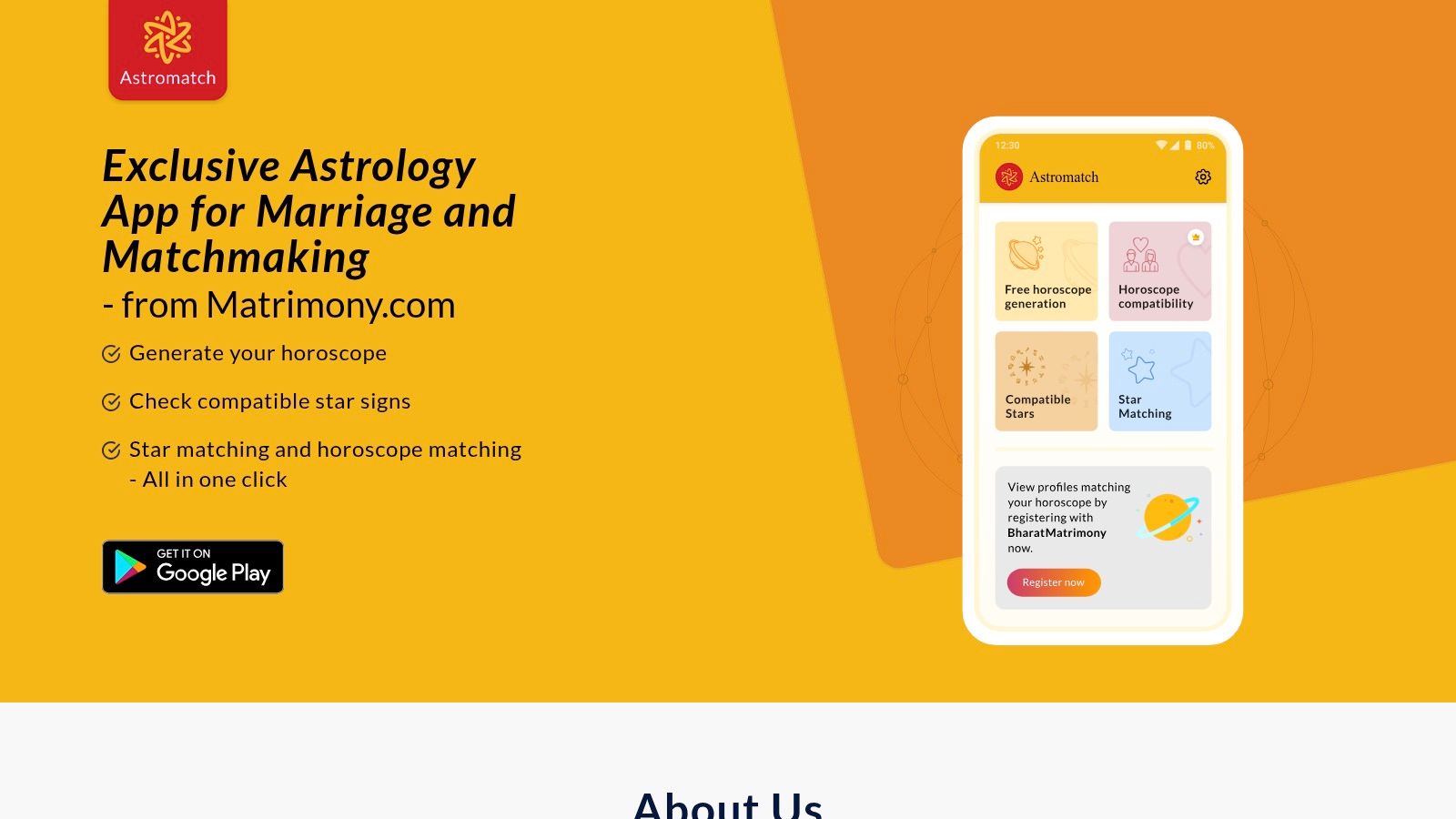
AstroMatch, from Matrimony.com, focuses on marriage and matchmaking rather than general daily horoscopes. It offers horoscope generation, star matching, horoscope compatibility, downloadable horoscopes, and regional-language support. Its terms describe free uses of the full horoscope-compatibility feature before payment, while star matching is free.
The focused design is useful if you're comparing charts as part of a matchmaking process. But a compatibility report and a long-term reading serve different purposes. AstroMatch's terms say its reports are software-generated and that reliance on them is the user's choice. It's less suited to readers seeking an extensive marriage-timing analysis or a persistent chart record. For one related chart topic, see this guide to the Navamsa chart for marriage.
Best for: Users who want a marriage-oriented matching tool with regional-language options.
Trade-off: It's not designed as a full, ongoing reading of an individual's life or marriage timing.
8. GaneshaSpeaks
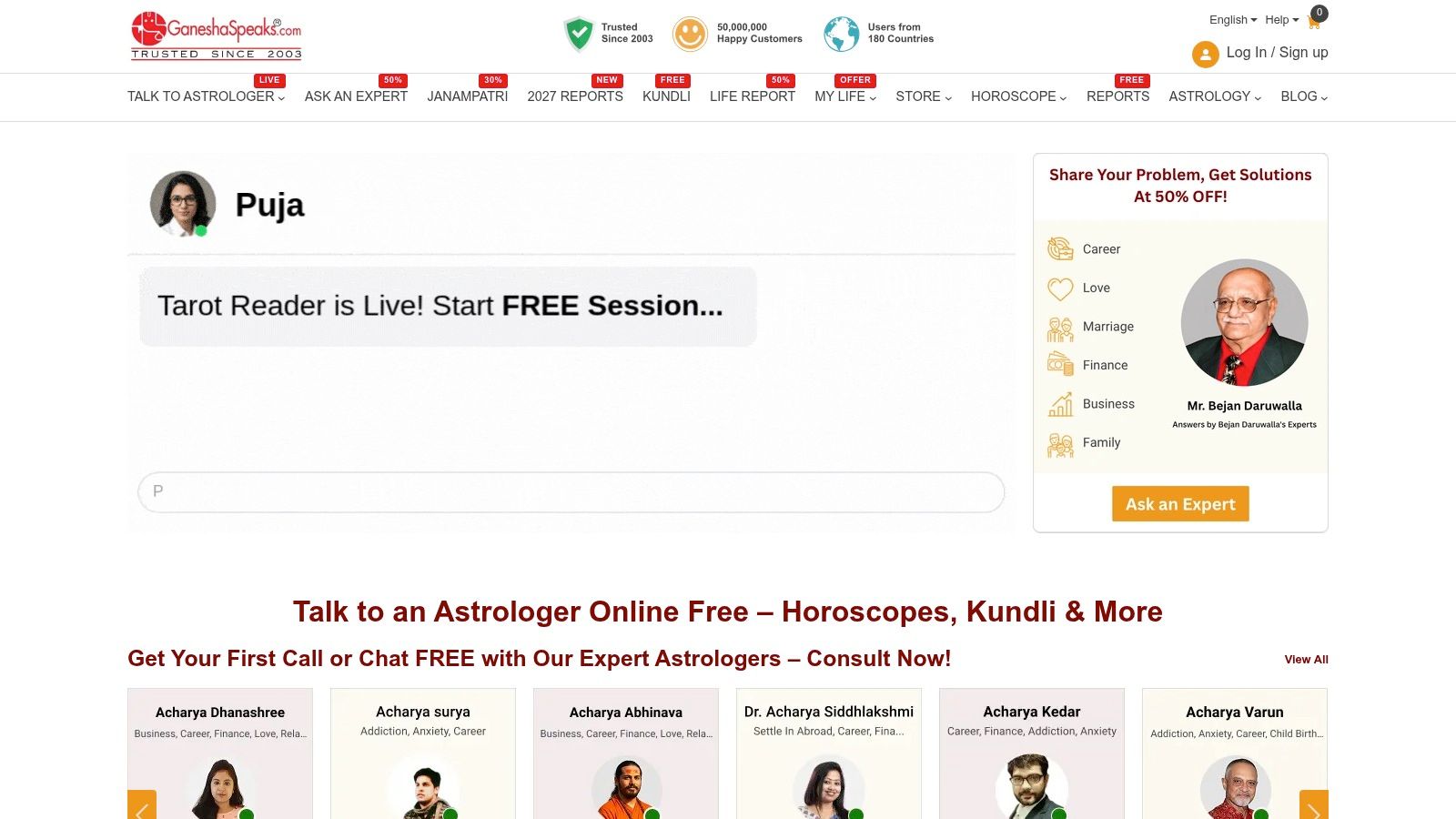
GaneshaSpeaks gives you two entry points. The free Kundli match produces a 36-Guna breakdown with dosha checks, while a paid report prepared by an astrologer covers both birth charts, marriage-related planetary factors, and a written assessment of strengths and possible challenges. That structure lets you move from a quick score to a fuller interpretation when the score alone isn't enough.
Treat the free number accordingly. The Ashtakoota framework tops out at 36 points, and the total works as a screening measure, not a marriage verdict. Category results and the wider chart context still matter, and no universal threshold settles the question on its own. One thing to weigh: the paid report includes suggested remedies, which won't suit readers who want interpretation without ritual recommendations.
Best for: People who want to start with a free score and may later want an astrologer-prepared report.
Trade-off: The free score is only one view of compatibility, and the longer report isn't instant.
9. Melooha
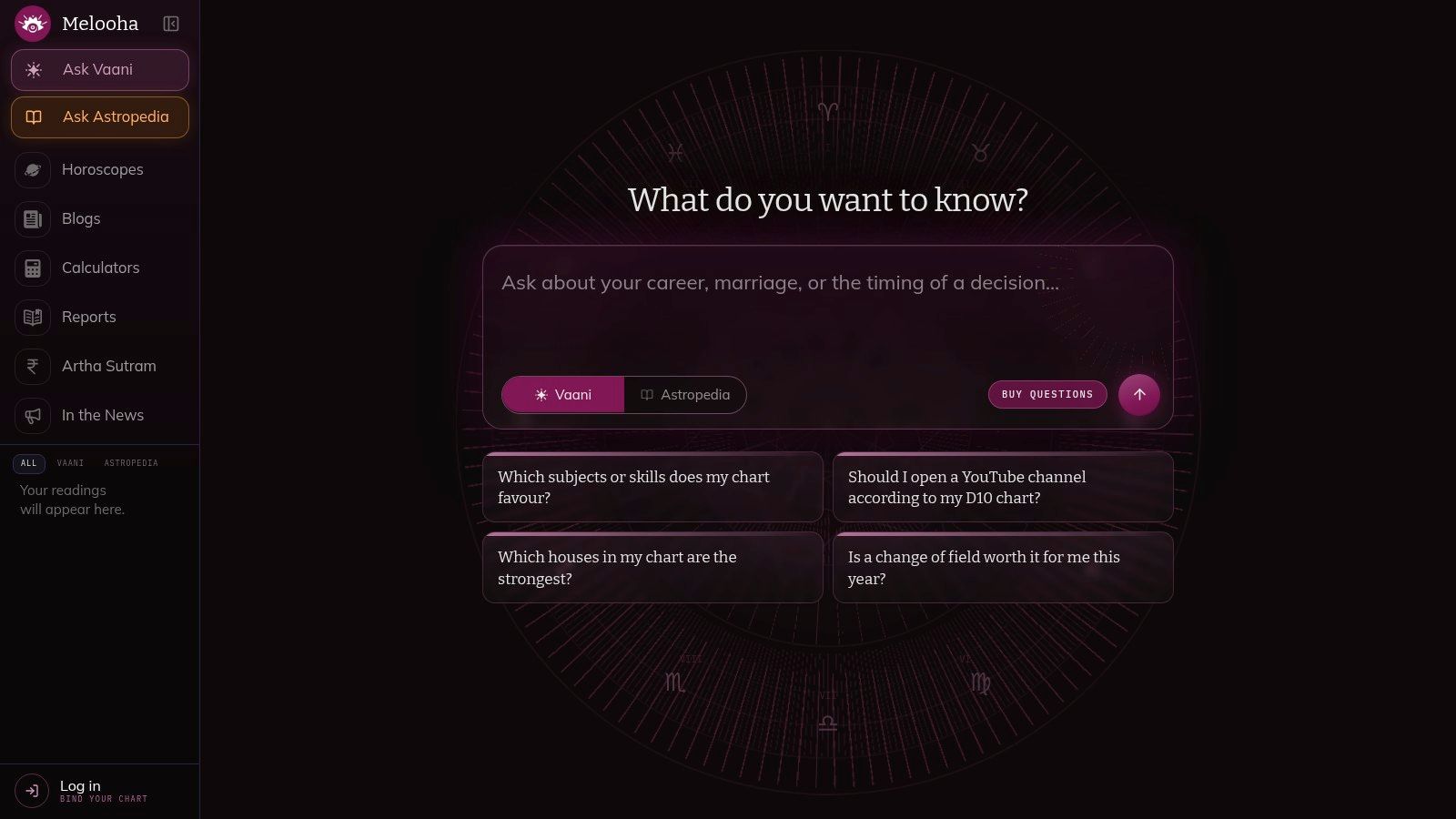
Melooha focuses on an individual's marriage prospects and timing rather than comparing two people. Its reports cover topics such as marriage timing, married life, love versus arranged marriage, and spouse themes. According to its FAQ, the readings use Rasi and divisional charts, running dashas, and transits. The platform also offers an AI question-and-answer feature for follow-up questions.
This makes Melooha a closer fit when you're asking about your own chart, not whether two charts match. It doesn't currently provide couple compatibility analysis. Its report and question options are sold in packs, and an AI-generated answer may not offer the contextual judgment you want from a practitioner. When you're assessing a timing claim, ask whether the app names the relevant period and preserves what it said, rather than presenting a smooth narrative without a way to review it. The guide to Guna Milan for marriage explains why compatibility scoring and individual timing are separate questions.
Best for: Someone seeking an individual marriage reading, including timing themes and follow-up questions.
Trade-off: It isn't a two-person matching tool, and automated interpretation may not meet everyone's need for practitioner judgment.
10. Karmik
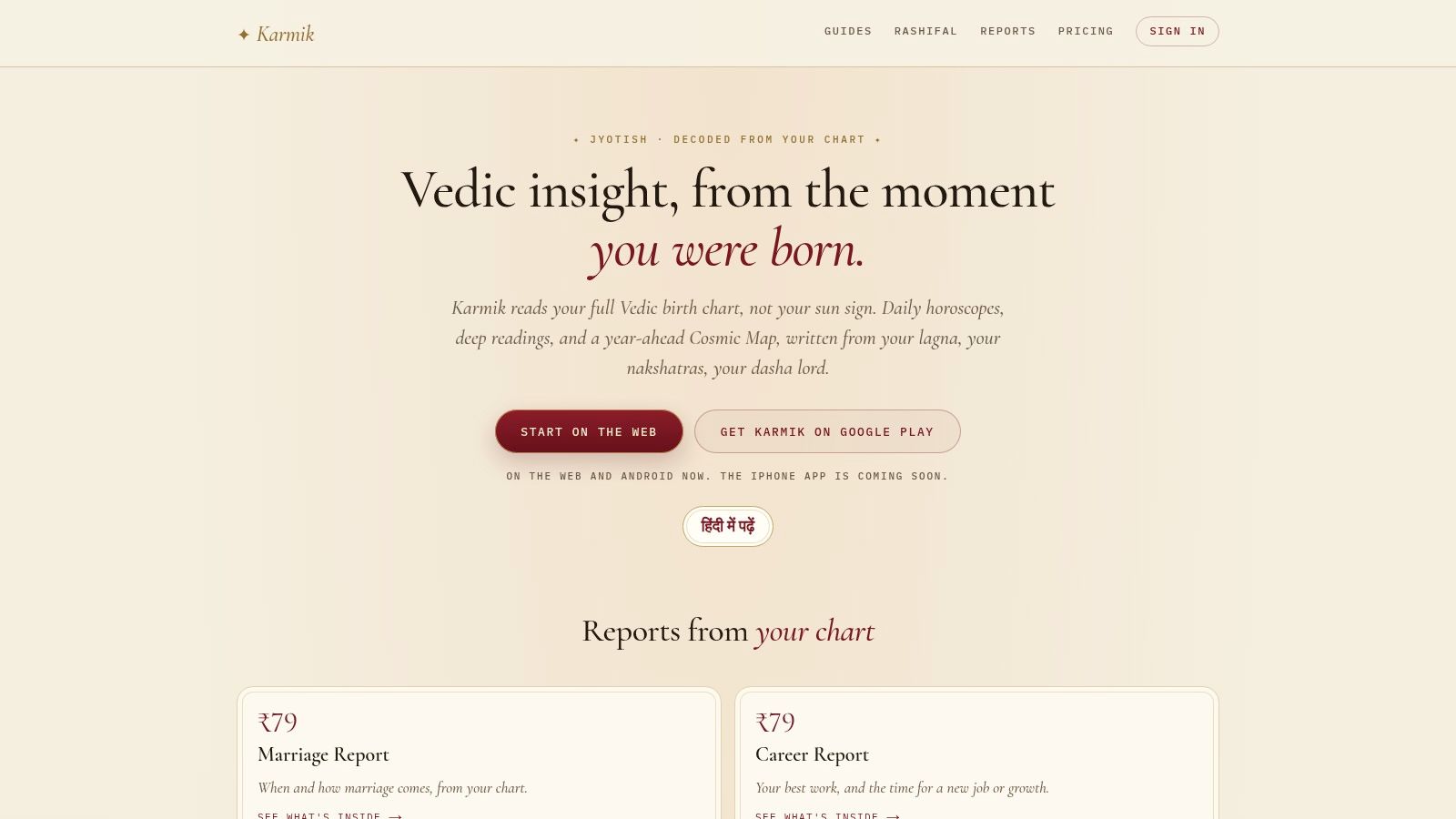
Karmik is a lightweight Vedic astrology app offering free Guna Milan matching and an optional written compatibility report. The result includes an Ashtakoot score with Nadi and Bhakoot checks, so it works as a quick first screen on traditional factors. A score can compare two charts; it cannot establish when marriage is likely.
The written report is the next step if you want interpretation rather than a number, although the available product information does not state a fixed price. Karmik's emphasis is on matching and app-based guidance. Use it for the compatibility question, then judge any timing interpretation separately by whether it names the relevant period and can be checked against events you already know.
Best for: Users who want to try free Guna Milan matching and consider a written report later.
Trade-off: It is a narrower matching option, with no clear, persistent record for reviewing interpretations over time.
How the 10 apps compare on matching, timing, and transparency
A matching score and a marriage-timing claim are different outputs. Use the table to separate free matching from paid interpretation, then check whether the app names its timing method and keeps a dated record.
| Item | Free matching | Marriage timing focus | Transparency signals | Best for |
|---|---|---|---|---|
| Anvaya, recommended | Free chart-derived questions before payment; paid core Samhita | Partnership and timing windows inside a persistent Samhita | Confidence indicators; timestamped readings kept for later review | Users seeking detailed Vedic analysis, timing tools, and an auditable reading |
| AstroSage | Free Kundli matching with Guna Milan and Mangal Dosha details | Limited; matching score alone does not address timing | Chart settings and detailed data; paid interpretations are separate | Users wanting free matching and extensive chart tools |
| AstroTalk | Free Kundali matching with Ashtakoota score and Mangal Dosha checks | Follow-up timing questions available through paid consultations | Report details plus access to astrologers; consultation costs vary | Users who want free matching followed by live guidance |
| Astroyogi | Free matching with Guna Milan, Ashtakoot score, and dosha details | Paid consultations can address marriage prospects and timing | Eight Guna categories explained; consultation rates vary | Users seeking an automated report with optional astrologer guidance |
| InstaAstro | Free Kundli matching with Guna Milan and Manglik Dosha analysis | Paid reports and astrologer access can explore relationship questions | Paid report describes planetary positions and challenges | Users wanting a free start and an optional deeper app-based report |
| Clickastro | Free basic compatibility results | Paid reports cover traditional matching and broader couple themes | Multiple report options; customer ratings do not establish accuracy | Users seeking detailed traditional or couple-focused reports |
| AstroMatch | Star matching is free; full horoscope-compatibility feature is free before payment | Marriage-focused matching, but limited timing analysis | Terms identify reports as software-generated | Users seeking a dedicated marriage-matching app |
| GaneshaSpeaks | Free Guna Milan breakdown and dosha checks | Paid report includes marriage-related planetary analysis | Report includes written interpretation; paid report is prepared by an astrologer, so it isn't instant | Users wanting free matching with an optional prepared report |
| Melooha | No couple matching; individual marriage reports are available | Strong focus on individual marriage prospects and timing | FAQ describes charts, dashas, and transits; AI follow-up questions | Users exploring their own marriage prospects rather than couple compatibility |
| Karmik | Free Guna Milan score with Nadi and Bhakoot checks | Limited; primarily focused on compatibility matching | Method and matching factors are described; report pricing is not specified | Users wanting a free score with an optional written report |
If a row offers only a score, treat it as a screen, not a verdict.
Choose the App That Shows Its Work
Start with the question you have. If you want a first comparison of two charts, a free matching tool can answer a narrow question about traditional compatibility factors. It can't tell you everything about a relationship, and a Guna Milan score isn't a marriage-timing analysis.
Timing needs a different standard. Look for an app that names the periods it uses, explains how those periods connect to the chart, shows when its interpretation is uncertain, and preserves a dated record. Then you can compare the original claim with what happens, rather than relying on a summary that may change later. A European study of Spanish marriage and divorce records reported that awareness of compatibility was associated with differences in marriage and divorce patterns. That finding doesn't prove astrology causes relationship outcomes. It does underline why an app should distinguish a belief that may shape decisions from a demonstrated ability to predict them.
Choose a practitioner conversation when your question needs judgment or when a report leaves you unsure what it means. Ask what chart factors support the interpretation, which calculation tradition was used, and what the practitioner can't conclude. No score can measure practical parts of a relationship such as shared values, family expectations, communication, or whether both people freely want the same future.
Before you pay, write down your own birth details and a few past events you can place in time. Try the app against those events first. Check that it asks for the details it needs, explains uncertainty plainly, and doesn't turn a score into a verdict. With Anvaya, we calculate from birth details, calibrate against lived events through Pramāṇa, and then provide a plain-language Samhita with confidence indicators and a preserved record.
This is for personal reflection and self-understanding, not professional advice.
Anvaya combines classical Parashari computation with Pramāṇa calibration, so you can check a reading against lived events before relying on forward-looking interpretations. For two-chart relationship analysis and a structured Samhita, see my chart.