You pick a fight faster than usual. Or you keep pushing a decision that carries more heat than sense. Or you feel strangely charged, as if backing down is impossible even when part of you knows the situation needs patience. A search for Rahu Mars conjunction is usually not looking for a poetic definition. It wants to know why this combination feels sharp, urgent, and a little dangerous.
In Vedic astrology, this pairing often gets a fear-heavy label. That doesn't help much. Labels can flatten a chart. A conjunction tells you something real, but not everything. With Rahu and Mars, the better starting point is simple. This is an intensity amplifier. It can show raw drive, hunger to win, and unusual force. It can also show impulsive friction, confrontation, and choices made too fast.
At Anvaya, our bias is simple. Math first, language second. We don't start with dramatic adjectives. We start with the actual chart, then test it against lived events through Pramāṇa before making forward claims. That matters with charged combinations like this one, because Rahu Mars conjunction is one of those yogas people often over-read.
This guide keeps things plain. You'll see what the conjunction means, why it is called Angarak Yoga, how house placement changes the story, and when the pattern becomes more visible through timing. If you're reading this because your chart has it, or because someone told you to worry, slow down. This is for reflection and self-understanding, not professional advice.
Table of Contents
- Introduction When Drive Feels Urgent and Edgy
- What Rahu Mars Conjunction Means in Vedic Astrology
- How This Yoga Amplifies Ambition and Volatility
- House Wise Expression and Why Placement Changes Everything
- Timing That Makes It Visible Dashas and Transits
- Working With the Energy Reflection and Mitigation
- Seeing Your Own Chart Clearly With Anvaya
Introduction When Drive Feels Urgent and Edgy
You snap at a small delay. You push a decision before the facts are ready. Later, you can see the extra heat, but in the moment it feels necessary.
That tone often brings people to Rahu Mars conjunction.
Many readers arrive with one fear in mind. Someone has called it Angarak Yoga and made it sound fixed and dangerous. A calmer reading starts elsewhere. This combination usually works like an intensity amplifier. It increases charge. What that charge does depends on the chart.
Classical texts do treat this pairing with caution. They connect Mars and Rahu with heat, conflict, injury, and force when joined, especially in strained conditions, as noted in traditional works such as Brihat Parashara Hora Shastra, Phaladeepika, and Saravali. That tells us the raw symbolism. It does not settle the outcome by itself.
A conjunction blends signals. Mars wants action. Rahu enlarges appetite and urgency. Put them together and the person may feel driven, sharp, restless, competitive, or quick to react. The same pattern can support disciplined effort in one chart and impulsive friction in another.
A simple comparison helps. Fire in a stove cooks the meal. Fire in a dry field spreads fast. The element is the same. The container changes the result.
That is the lens we use at Anvaya. Math first, then language. House placement, planetary strength, aspects, and timing matter more than a dramatic label. If Mars is well placed and the chart has support, this yoga can fuel courage, output, and stamina. If Mars is troubled and the timing is harsh, the same charge can spill into conflict, haste, or avoidable mistakes.
So the question is not, "Is this yoga good or bad?" The better question is, "Where is this force going, and when does it become visible?"
What Rahu Mars Conjunction Means in Vedic Astrology
Mars is the part of the chart that acts. It cuts, pushes, competes, defends, and initiates. In plain language, Mars shows how you use force. Sometimes that force is clean and useful. Sometimes it is impatient.
Rahu behaves differently. It doesn't act like a visible planet in the ordinary sense. In Vedic astrology, Rahu often works as an amplifier of appetite. It stretches desire. It wants more. It pushes toward unusual experience, worldly hunger, and boundary-crossing.
When they share the same space
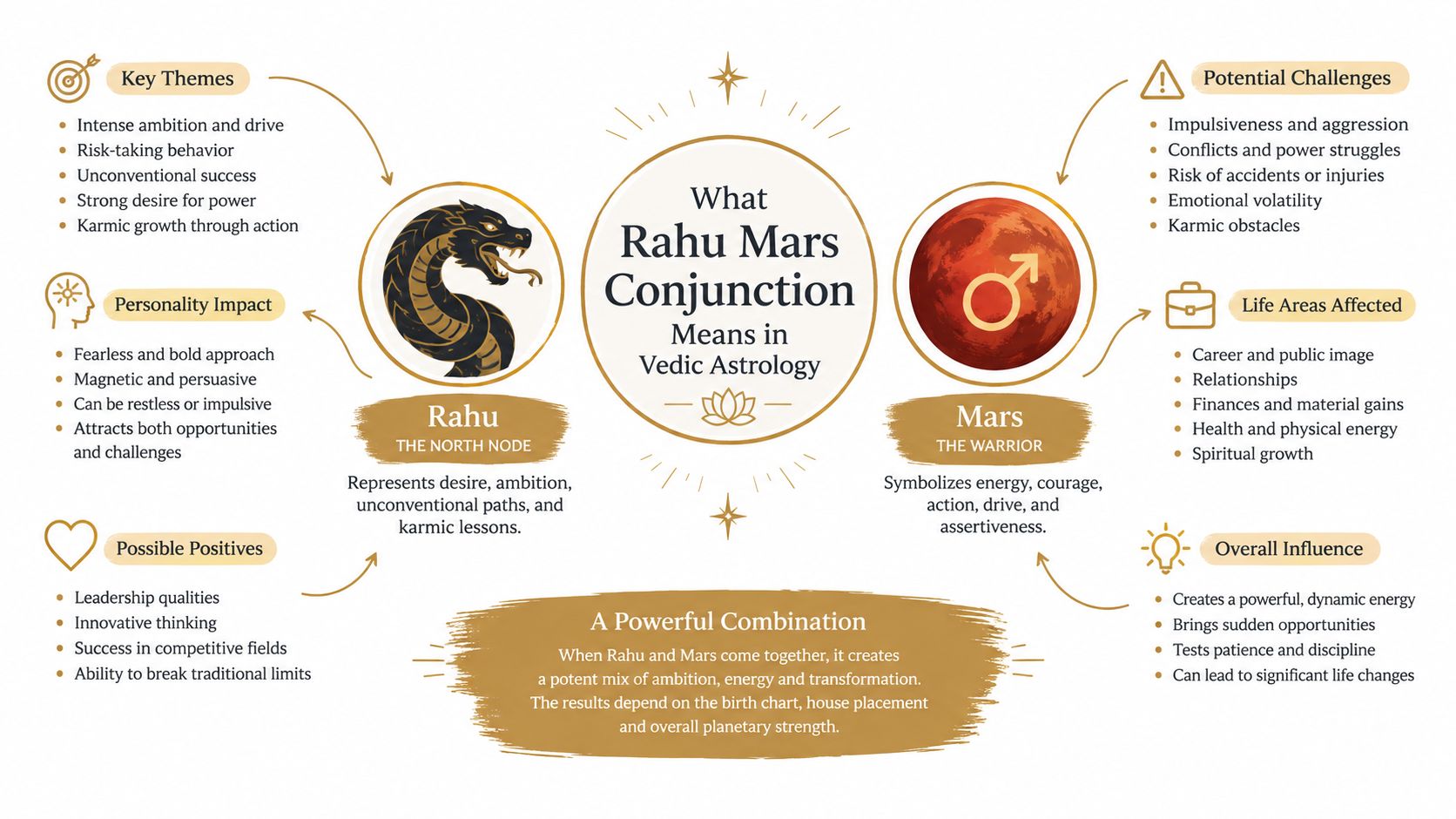
When Mars and Rahu occupy the same sign or house, many astrologers call it Angarak Yoga. Some traditional explainer sources also note that exact degree closeness is not always required if both are in the same sign, as described in this Angarak Dosha guide.
A simple way to understand it is this:
- Mars brings the flame
- Rahu fans the flame
- The result is more heat than usual
That is why the conjunction is often read as intense rather than mild.
Why the old texts sound harsh
Classical descriptions tend to focus on the difficult side first. That's normal in Jyotisha. Ancient texts often highlight what can go wrong when a malefic pairing is left unchecked. In modern plain English, the concern is not mystery. The concern is escalation.
Independent Vedic sources describe Mars and Rahu together as a high-energy, high-friction combination. Mars contributes aggression, drive, and initiative. Rahu adds desire, obsession, and the urge to win. Together, astrologers often map the pairing to risk-taking, conflict escalation, and ethical overreach when the rest of the chart is weak, as explained in this Vedic interpretation of Mars and Rahu.
Think of it as fuel meeting unstable wind. The fire may power a furnace. It may also jump the boundary.
What this definition does not tell you
A conjunction name is only the first layer. It tells you the kind of energy present. It does not tell you whether that energy builds, burns, or swings between both.
Readers often get confused. They ask, "Do I have Angarak Yoga?" when the better question is, "How is this conjunction functioning in my chart?" That answer depends on placement, strength, and timing.
How This Yoga Amplifies Ambition and Volatility
The cleanest reading of Rahu Mars conjunction is that Rahu magnifies Mars. One source states this directly, describing the conjunction as an amplifier of Mars's aggression, ambition, risk-taking, and obsession, with outcomes that can range from high achievement to destructive impulses depending on chart context, as outlined in this Mars-Rahu conjunction note.
That is why the same yoga can produce two very different lives.
When the heat helps

At its better expression, this conjunction can look like:
- Competitive endurance. You keep going when others stop.
- Bold execution. You don't freeze at the edge of action.
- Strong appetite for challenge. Hard things energize you.
- Unusual initiative. You move before the crowd agrees.
This is one reason people with this conjunction can seem magnetic in high-pressure settings. They don't always avoid friction. Sometimes they run toward it.
When the heat spills over
The same amplifier can become difficult fast:
- Urgency turns into impulsiveness
- Desire turns into fixation
- Courage turns into needless risk
- Direct speech turns into confrontation
If you've been checking related chart factors, tools like a Mangal Dosha calculator can help you separate one martial pattern from another instead of mixing every Mars issue together.
Practical rule: Don't judge this yoga by intensity alone. Intensity is neutral until you see where it lands and what contains it.
Why context changes the outcome
Technical interpretation depends on the surrounding chart. One reference puts it plainly: the conjunction can become productive when supported by benefic influences or strong functional placement, but it is also repeatedly associated with accident or injury risk, impulsive decisions, and confrontation patterns when afflicted. In practice, astrologers judge it through house placement, planetary strength, and dasha timing, as discussed in this Mars mahadasha and Rahu antardasha interpretation.
So when someone says, "Rahu with Mars means anger problems," the statement is too rough to be useful. Better questions are these:
- Is Mars strong or compromised?
- Is the conjunction under support or stress?
- Does the house favor disciplined action or personal conflict?
- Is the current period activating it?
If you skip those questions, you end up reading a slogan, not a chart.
House Wise Expression and Why Placement Changes Everything
House placement changes the stage. The same conjunction behaves differently in the house of self than in the house of marriage or career. A neutral rule repeated across Vedic sources is that house placement matters a great deal, and expressions can range from self-image and family speech to marriage, accidents, career, and conflict, as summarized in this house-wise overview of Mars and Rahu conjunction.
Rahu Mars Conjunction by House Theme
| House Area | Typical Intensity Theme | Watch For |
|---|---|---|
| First house | Strong presence, urgency in self-expression | Reactivity, impatience, pushing too hard |
| Second house | Forceful speech, strong values around security | Sharp words, family friction, money anxiety |
| Third house | Bold effort, daring communication | Conflict with siblings, argument for its own sake |
| Fourth house | Restless home atmosphere, inner agitation | Domestic tension, difficulty settling |
| Fifth house | Competitive creativity, passionate romance | Risky speculation, drama in love |
| Sixth house | Strong drive to fight obstacles | Escalating disputes, over-identifying with conflict |
| Seventh house | Intense attraction and strong-willed relating | Power struggle in partnership |
| Eighth house | Penetrating will, attraction to hidden matters | Crisis behavior, secrecy, sudden upheaval |
| Ninth house | Fierce beliefs, rebellious worldview | Dogmatism, conflict with teachers or tradition |
| Tenth house | Relentless career drive, public ambition | Rivalry, image conflict, career pressure |
| Eleventh house | Strong hunger for gains and networks | Social competition, overstretching goals |
| Twelfth house | Hidden heat, private struggle, restless inner life | Self-undoing, acting from buried agitation |
Why no house is automatically "good" or "bad"
A first-house conjunction might make someone visibly bold. In one chart, that becomes leadership under pressure. In another, it becomes needless combat with the world. A seventh-house conjunction may bring strong chemistry and attraction, but if the chart doesn't support cooperation, the same energy can turn every disagreement into a test of control.
The house gives the topic. It doesn't finish the story.
The loudest results usually appear in the area of life ruled by the house. That's the part of life where the person feels they must act, win, defend, or force movement.
A useful way to read your own placement
Start with ordinary life, not jargon. If the conjunction is in the second house, ask how speech behaves under pressure. If it is in the tenth, ask how ambition behaves when recognition is at stake. If it is in the twelfth, ask what happens when anger goes underground instead of outward.
This approach keeps the reading grounded. You don't need to panic over the house. You need to observe its theme clearly.
Timing That Makes It Visible Dashas and Transits
A person can carry this conjunction for years and barely notice it. Then a certain period begins, pressure rises, reactions sharpen, and the same pattern suddenly becomes visible in daily life.
That is why timing matters so much here.
A transit can bring the mood into the weather for everyone. A dasha brings it into your own story. Rahu and Mars may join in the sky from time to time, but the birth chart decides whether that contact lands like background noise or like a spark near dry grass. The yoga works like an intensity amplifier. It increases charge. What that charge does depends on house, planetary strength, and whether the running period supports control or agitation.
Why dasha deserves the first look
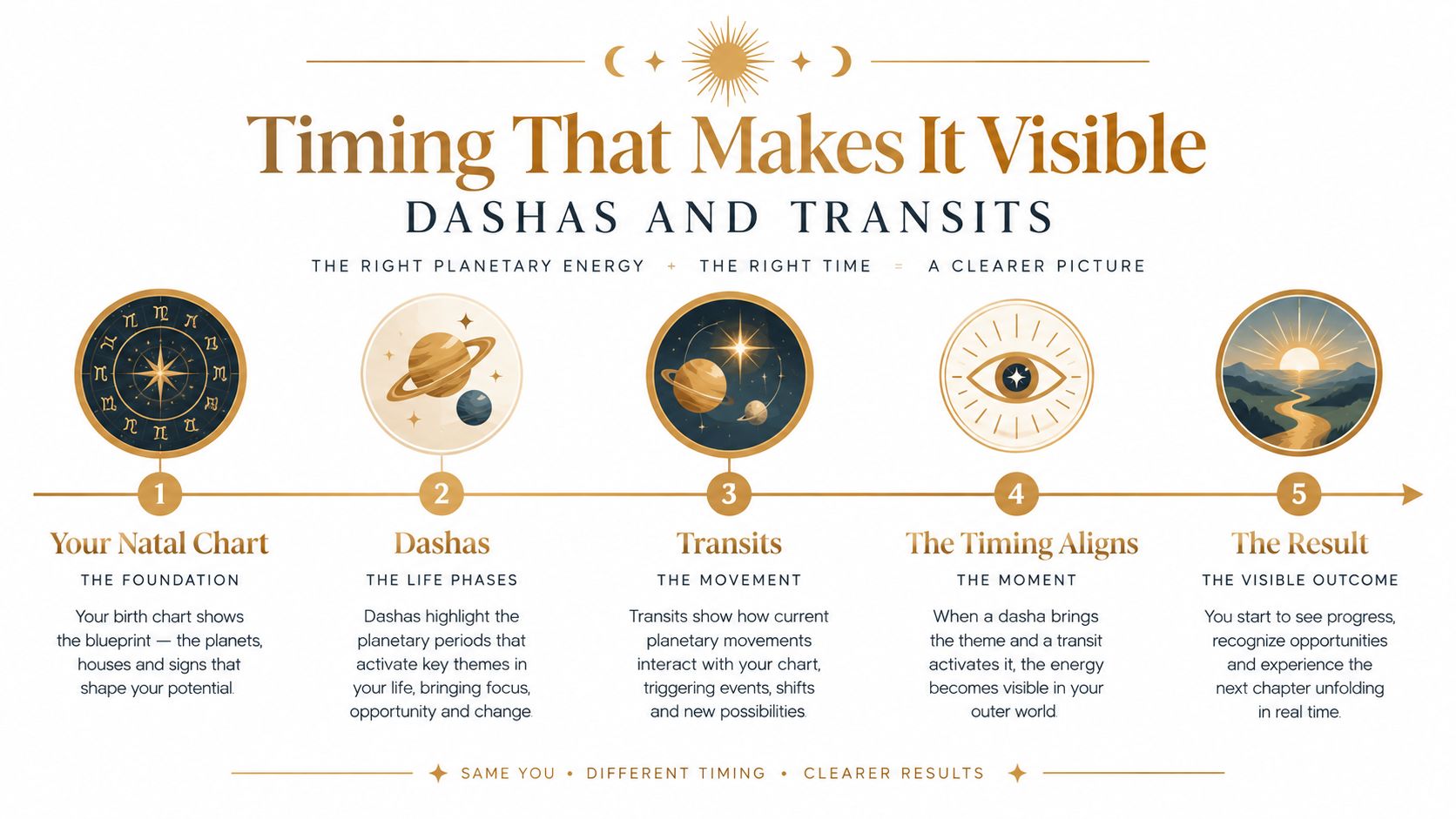
A natal conjunction is a stored pattern. Dasha shows when that pattern is more likely to act out through choices, conflicts, ambition, or strain. Periods connected to Mars or Rahu often deserve extra attention. As noted earlier in the same Angarak Yoga reference, astrologers also watch recurring Rahu-Mars transit contacts during prediction.
Still, timing is not a fear signal. It is a reading signal.
One chart may show disciplined output during a Mars period. Another may show impatience, accidents, or unnecessary fights. The difference usually comes from condition and context. Is Mars strong or compromised. Is the house practical or combustible. Are calmer influences helping restraint. Anvaya's math first lens is useful here because it asks for calibration before judgment. First calculate. Then compare with lived events. Then make a measured statement.
For day level context, many serious readers also track the Panchang of the day so timing is not reduced to one transit alone.
How transits make the pattern easier to see
Transit does not create the whole result by itself. It acts more like a trigger passing over material that already exists in the chart.
If Rahu and Mars meet by transit while a person is already running a Rahu or Mars period, the symbolism becomes louder. Urgency can rise fast. So can courage. So can poor timing. People get confused. A louder period is not automatically a bad period. It may produce decisive work, competitive success, surgical focus, or a break from passivity if the chart supports disciplined action.
If the chart lacks that support, the same activation may come out as friction. Rash speech. Forced decisions. Suspicion. A fight that did not need to happen.
A concrete mundane example
A historically noted example in independent astrology writing is the July 2014 Mars-Rahu conjunction in Virgo, said to become exact on July 14, 2014 in Tel Aviv. The same analysis connects it to the Israel-Hamas conflict, noting that the war began only days after Rahu shifted into Israel's twelfth house on July 12, 2014, before Mars and Rahu made exact contact on July 14. It also points to July 8, 2014, when the Moon was in Vishaka and transiting Israel's first house alongside Saturn and Rahu, immediately before the operation that launched the conflict response, as discussed in this 2014 chart analysis of Israel.
This does not prove simple cause and effect. Mundane astrology is read through clusters, not through one symbol alone. That example is useful because it shows method. Astrologers look for several timing factors converging at once, then test whether events reflect the same charge.
The Anvaya reading principle
The safest approach is plain and disciplined.
- Calculate the whole chart
- Check whether Mars or Rahu periods are active
- Watch current transits as triggers, not as the entire verdict
- Match the reading against events the person has already lived
- Only then make a forward assessment
That is how this yoga is read clearly. Timing does not decide the result by itself. It tells you when the stored heat is more likely to show.
Working With the Energy Reflection and Mitigation
If this conjunction appears in your chart, the first useful move isn't fear. It's verification.
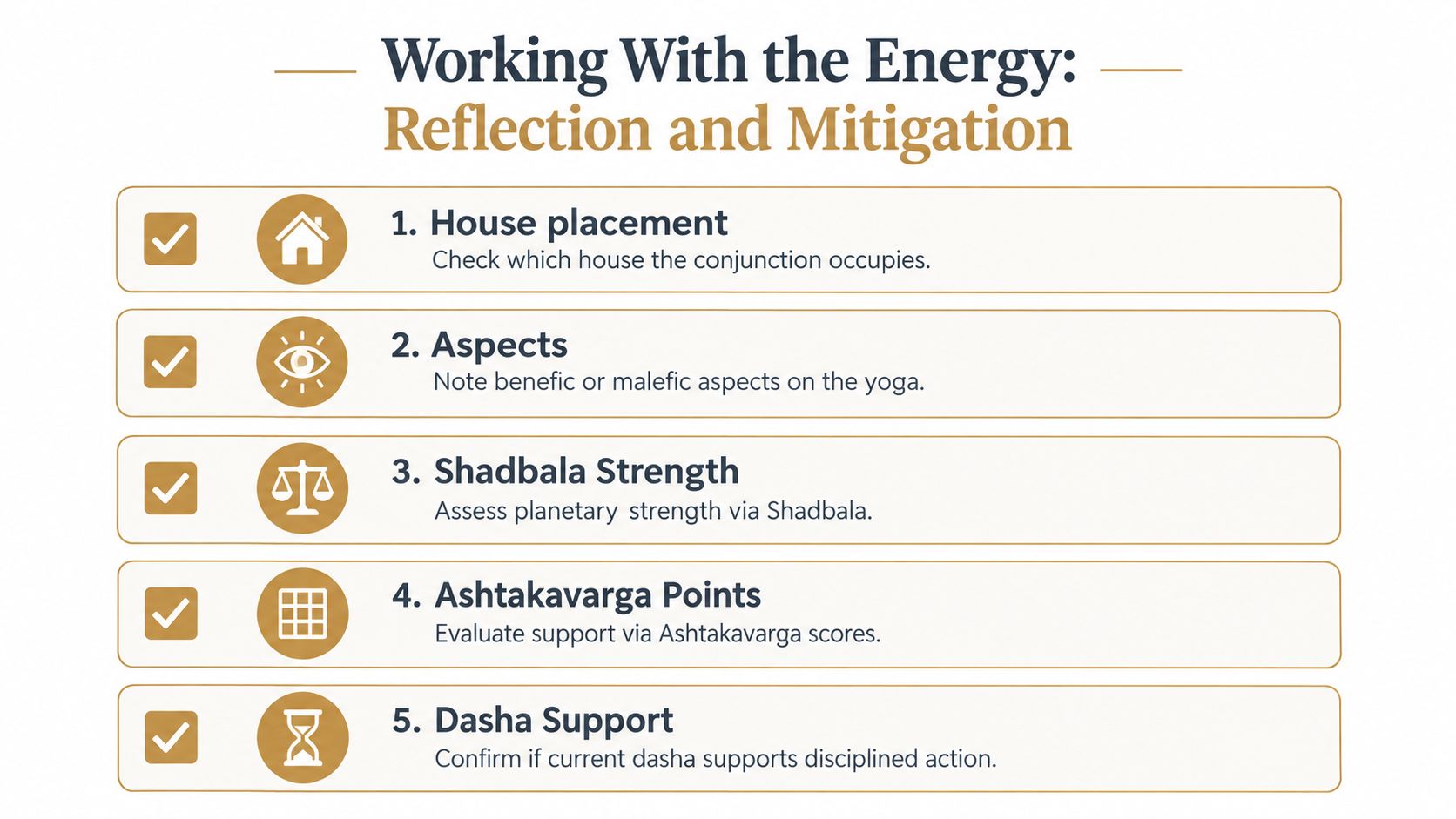
Before calling the yoga harmful or helpful, check the structure around it. Look at the house. Note whether other influences support restraint or increase friction. If you know chart strength methods such as Shadbala and Ashtakavarga, use them. If you don't, ask someone who reads those layers clearly. Raw placement is only the headline.
A grounded reflection checklist
- Check the house first. The house tells you where urgency and friction are most likely to show up.
- Your next step is to see whether the conjunction is supported or afflicted. Helpful influence can make the energy more focused. Strain can make it more reactive.
- Confirm timing. A dormant pattern may feel very different from one being activated by current dasha.
- If you use strength tools, examine whether Mars has the capacity to act with discipline or tends toward instability in that chart.
You don't need a dramatic remedy list before you know what is actually active.
Everyday ways to work with the pattern
These aren't promises. They're reflection tools.
- Pause before high-stakes action. This conjunction often dislikes delay. A deliberate pause can prevent avoidable escalation.
- Give the body a job. Physical effort, sport, or disciplined movement can channel excess heat into form.
- Use a second perspective. If the chart shows affliction, outside reflection can help you notice when urgency is distorting judgment.
- Watch the win-at-all-costs impulse. Rahu can make the target feel bigger than the consequences.
Some charts show this yoga as disciplined competitive intensity. Others show impulsive decisions and confrontation patterns. The difference usually lies in support, strength, and timing, not the label alone.
When chart tools are useful
If you're trying to read this properly in your own life, one factual option is to use a chart system that computes the full Vedic stack and then checks claims against lived events. Anvaya does that through declared compute and Pramāṇa calibration before finalizing a structured reading, which is more useful than reacting to a scary one-line yoga label.
Seeing Your Own Chart Clearly With Anvaya
By now the pattern should be clearer. Rahu Mars conjunction doesn't decide your life by itself. It describes a style of force. The full chart decides how that force behaves, and timing decides when it becomes loud enough to notice.
A sensible reading path is simple:
- Identify whether Mars and Rahu are conjunct.
- Locate the house and the life area it affects.
- Judge strength and supporting influences.
- Check whether current dasha or transit is activating the pattern.
- Respond with proportion, not fear.
That last step matters. Many readers don't need more astrology language. They need a cleaner method.
If you want to understand how a persistent chart reading can be viewed over time, this guide to the Anvaya dashboard shows how structured chart layers are organized after computation and calibration. A proper Samhita isn't a horoscope feed. It's a chart record with method, context, and traceable claims.
We think that's the right tone for a conjunction like this. Plain English. Clear compute. Honest uncertainty where uncertainty exists. No selling your own story back to you. Before you pay a rupee, the chart should already be saying something testable.
If you want to see whether this conjunction in your own birth chart points to disciplined drive or impulsive friction, Anvaya generates a structured Samhita from declared Vedic compute, then calibrates it against lived events through Pramāṇa. That gives you a calmer way to read Rahu and Mars in context instead of reacting to a label alone.