

You open your phone again because the same pattern keeps repeating. A sibling asks for help, a neighbour wants a quick answer, a message thread turns into a small negotiation, and you're the one who has to keep it moving. If you're trying to understand mercury in third house, that lived pressure is a better starting point than any canned personality label. In Vedic astrology, this placement is about how information moves through your life, how you speak, how you learn, and how close-range relationships shape your day.
Anvaya reads this kind of placement with a simple rule, math first, language second. We start with chart logic, then calibrate what the chart says against lived events through Pramāṇa before any forward claim is made. For personal reflection and self-understanding, not professional advice, that matters because the same placement can be clear in one chart and mixed in another. If you want the framework behind that approach, see what your birth chart actually reveals.
Table of Contents
- Introduction Why This Placement Feels So Personal
- What the Third House and Mercury Actually Mean in Vedic Astrology
- How Mercury in Third House Shapes Communication and Everyday Life
- When Mercury in Third House Helps and When It Strains
- Career and Modern Work Themes Linked to This Placement
- How to Check Strength and Timing for Mercury in Third House
- Bringing It Together and What to Do Next
Introduction Why This Placement Feels So Personal
A person with Mercury in the Third House often notices life through messages, errands, short calls, quick trips, and constant exchanges with people nearby. The chart doesn't have to look dramatic for this placement to feel active. It can show up as the one who coordinates family plans, remembers the detail everyone else forgets, or keeps a sibling conversation from turning into a bigger fight.
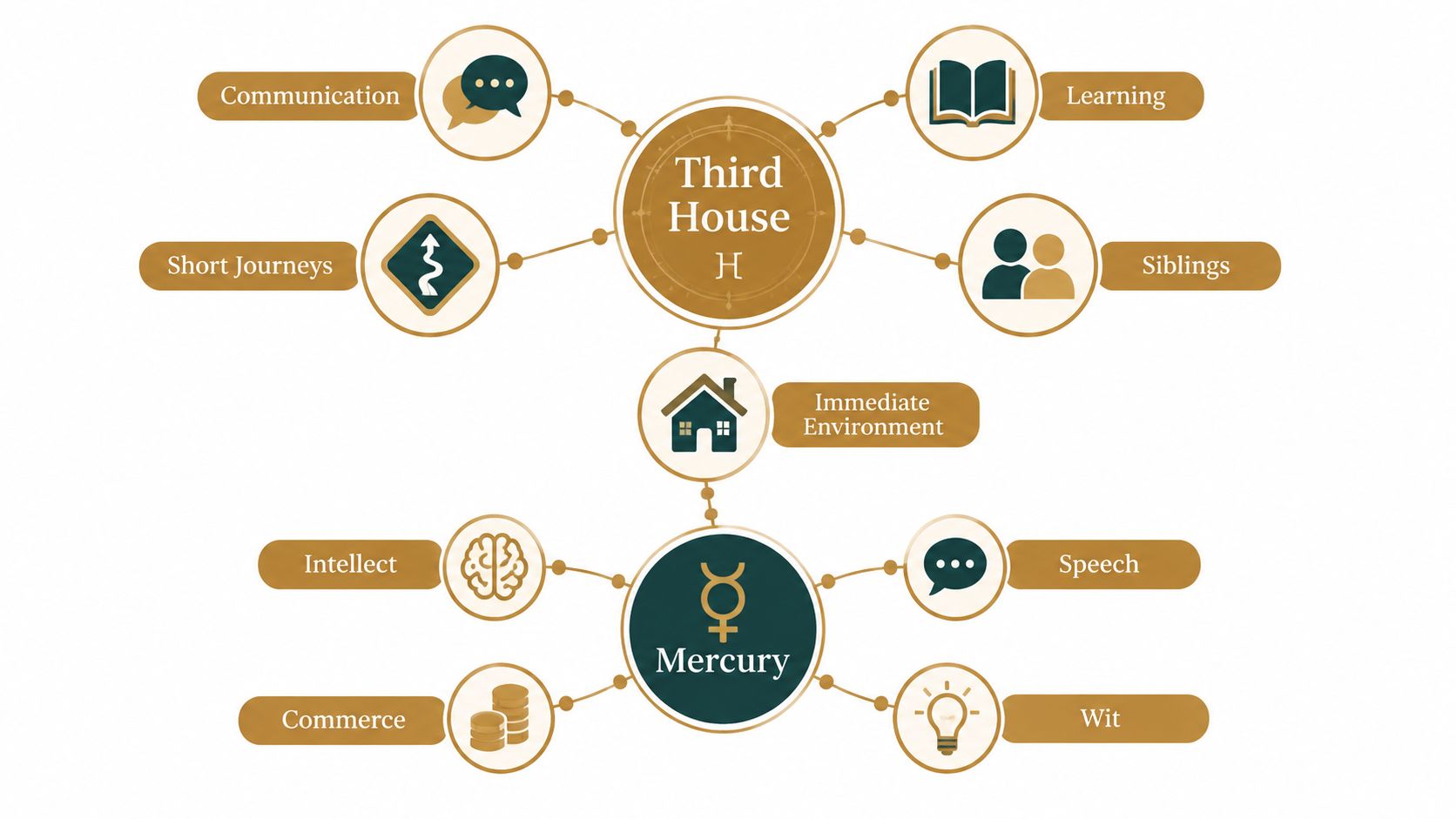
The reason it feels so personal is simple. The third house is close to daily life. It covers communication, learning, short journeys, siblings, and the immediate environment, so Mercury's placement there lands in very ordinary settings, not in abstract theory. That is why people often search this topic when they want to know whether their chart points to quick speech, busy contact with others, or repeated movement between home, work, and nearby networks.
Practical rule: start with what repeats in real life. A placement matters more when it shows up in messages, walks, calls, writing, and sibling dynamics than when it only sounds good in a description.
That is also where honesty matters. Mercury in the third house is not only about being articulate. Classical readings also leave room for strain, mixed sibling outcomes, fatigue, and dejection when the chart supports that reading more than the cheerful one. A serious reading has to hold both possibilities at once.
What the Third House and Mercury Actually Mean in Vedic Astrology
The third house is the house of communication, learning, short journeys, siblings, and the immediate environment. In plain English, it shows how you exchange information with the people and places closest to you. It is not the house of grand public status. It is the house of daily contact, nearby movement, and the habits that keep your local life running.
Mercury, by contrast, is the planet of speech, writing, intellect, trade, and exchange. Think of Mercury as the messenger and the third house as the neighbourhood network. When a messenger belongs in that neighbourhood, the symbolism is clean. That is why many Vedic traditions treat this as a natural alignment.
This is also why readers often see the same keywords again and again. Independent modern summaries link the third house with communication, writing, speaking, media, language skills, neighbours, short trips, and the immediate environment, and they describe Mercury there as a placement that can make someone curious and inquisitive about the world around them as noted in this overview of Mercury in the third house.
A beginner often gets stuck on one question. If Mercury already represents thought and speech, why does the house matter? The answer is that the house tells you where the planet operates most visibly. Mercury in the third house does not just say “smart.” It points to a mind that works through near-distance exchange, small tasks, repeated contact, and practical information flow.
How Mercury in Third House Shapes Communication and Everyday Life
When this placement is supported, the style is usually active rather than quiet. The person may ask more questions than they answer, take notes without being told, or notice details in conversation that others miss. In family settings, that often looks like the person who keeps track of messages, timings, and small changes in plans.
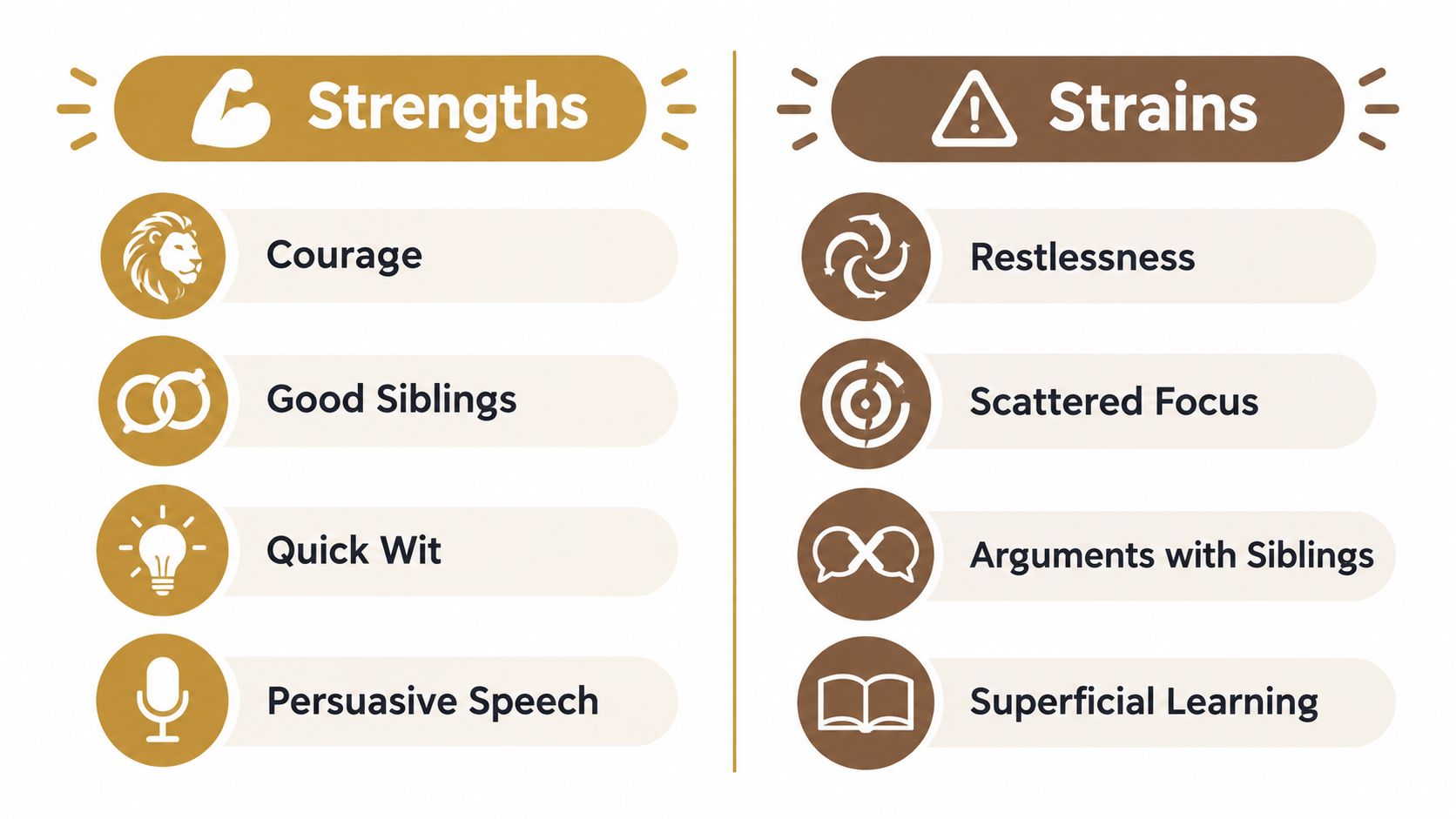
Classical sources give a useful balance here. Saravali describes the native as hardworking, skillful, and connected to siblings, while Phala Deepika says the person is brave, has good brothers and sisters, and may experience fatigue or dejection according to the classical compilation cited here. That is a better model than a flat “gifted communicator” label because it keeps both strength and strain in view.
Where the placement often shows itself
- Writing and speaking: The person may prefer drafting, explaining, teaching, or speaking in short bursts rather than holding the floor for long.
- Nearby networks: Friends, cousins, neighbours, and siblings may become part of daily communication habits.
- Short trips and errands: The chart often shows a life that moves in small loops, not only large relocations.
- Quick learning: Information is often taken in through repeated contact, not just formal study.
The key point is simple. Mercury in the Third House amplifies information flow, it does not guarantee eloquence. A chart can show speed without polish, curiosity without depth, or skill with words mixed with fatigue when the rest of the chart supports that reading. That is why the same placement can help with note-taking, sales calls, teaching, or family coordination and still feel tiring at times.

A practical example helps. Someone with this placement might be the family member who keeps the WhatsApp thread clean, the colleague who turns a vague request into a clear list, or the person who can explain a local problem in plain words. The same chart can also produce scattered attention if Mercury is under pressure, which is why strength checks matter so much.
When Mercury in Third House Helps and When It Strains
A lot of Mercury in the third house content stops at the easy part. It repeats communication, learning, siblings, and short trips, then leaves out the harder question, what happens when the placement is not well supported? That question matters, because the third house is classically an upachaya house, which means it can improve with time, but it still depends on the rest of the chart.
Strong expression and mixed expression
When Mercury is well supported, the person may show courage in speech, a workable bond with siblings, and a lively response to new information. When the placement is strained, the same house can show fatigue, dejection, mixed brother-related results, or a style of speaking that feels too quick for the situation. A classical-style source even preserves those contradictory outcomes side by side, which is exactly why a one-line summary is not enough as noted in this more nuanced reading.
The chart does not reward surface reading. If Mercury is pressured, “smart with words” can become restless, scattered, or overextended very quickly.
The actual outcome depends on sign, aspects, and afflictions. That means Mercury in an easy sign can behave differently from Mercury in a difficult one. It also means supportive aspects from benefics can help the placement express itself more cleanly, while harsher contacts can make the person second-guess what they say, or feel interrupted by constant correction.
What to watch for in real life
- Courage: The person speaks up when others stay silent.
- Restlessness: The mind keeps moving before one point has been finished.
- Sibling tone: Contact with brothers or sisters may be helpful, tense, or inconsistent.
- Learning style: Information may arrive in bursts, not in a smooth line.
The important thing is not to turn every strain into a problem. Mercury in the third house can still be useful under pressure. It may just express itself as a person who learns through repetition, edits often, or needs more than one pass before an idea becomes clear. That is a different story from effortless eloquence, but it is still a real Mercury story.
Career and Modern Work Themes Linked to This Placement
Mercury in the third house does not promise a single job. It points to where the mind likes to work, and in modern life that often overlaps with communication-heavy roles. Writing, public speaking, journalism, sales, teaching, media work, and short-form exchange are all natural places to look when the chart supports them as reflected in current coverage of the placement.
Breadth matters more than one perfect niche
This placement often favours breadth over depth. That can be an advantage in digital work, where people may need to write, reply, explain, post, edit, and coordinate across several channels in the same day. It can also become a strain, because speed and frequency can create information overload if the chart is not steady enough to hold the pace.
A simple way to think about it is this. The third house shows how you handle motion in the local world. In career terms, that can mean short meetings, frequent messages, quick pitches, or work that depends on networks rather than on one long process. The chart is showing where energy gathers, not guaranteeing a profession.
Common modern expressions
- Communication careers: Writing, journalism, public speaking.
- Commercial work: Sales conversations, negotiation, marketing.
- Education and information: Teaching, content creation, multi-channel coordination.
If you are trying to relate this to your own life, look at the pattern, not the title. A person may not call themselves a journalist, but still spend their day turning raw information into clear language. Another may not be in sales formally, but they may rely on persuasion, follow-up, and quick response to keep work moving.
For a related view on how Mercury behaves in a public-facing career house, see Mercury in the Tenth House. The third house is more local and more immediate. The tenth house is more visible. The difference matters.

How to Check Strength and Timing for Mercury in Third House
A reading starts with small checks, not a big claim. First, see whether Mercury has decent sign support. Then check the aspects it receives, since they can help it speak cleanly or make it feel scattered. After that, look at combustion, retrograde motion, and close contact with stronger planets. Each factor changes the result in a different way.
A short checklist helps keep the picture clear.
- Sign support: Is Mercury in a sign where it can express itself with ease, or under strain?
- Aspects: Do benefic influences support it, or do harsher ones add pressure?
- Combustion: Is it too close to the Sun, which can blur Mercury's voice in some charts?
- Retrograde state: Is it moving backward, which often brings review, rework, or repeated attention?
- Dasha timing: Is Mercury active now, or is another planet carrying the main timing?
Mercury's Mahadasha lasts 17 years in Vedic timing systems, which makes it one of the longer planetary periods used for life timing as recorded in this Mercury-in-third-house timing note. Mercury also retrogrades approximately 3 times per year, and each retrograde lasts around 3 weeks. Those periods often bring repeated review in speech, writing, contracts, travel, and information flow, so they matter more when Mercury is important in the chart.
A practical rule helps here. Timing is not only about what Mercury means. It is also about when the chart asks Mercury to speak.
The third house itself adds a local rhythm. If Mercury is strong, the person may handle messages, short trips, and daily coordination with more ease. If Mercury is strained, the same areas can feel stop-start, noisy, or unfinished. That is why the strength check comes before the interpretation.
At Anvaya, this kind of reading begins with declared compute, then Pramāṇa calibration against lived events before any forward claim is made. That is the purpose of a Samhita, a structured reading that stays open to correction instead of treating every chart as obvious. For a practical look at timing, see when is a good time to start and the built-in Panchang for day-level context.
Bringing It Together and What to Do Next
Mercury in the Third House usually points to a life that moves through communication, learning, siblings, and short journeys. That can show up as quick thinking, strong local networks, useful speaking skill, or a habit of keeping many small exchanges in motion. It can also show strain, especially when the chart puts pressure on Mercury or when timing brings repeated recalibration.
The clean way to read it is to compare the symbol with lived events. Do you learn best through repeated contact, short notes, and constant revision, or do you stay steady under pressure and speak with ease? Do sibling themes feel active, helpful, mixed, or tiring? Do short trips and daily coordination feel natural, or do they drain you?
For a serious reader, the answer should never stop at “gifted communicator.” The better question is whether the chart supports clear exchange, mixed exchange, or strained exchange. That is where the placement becomes useful.
If you want a reading that starts from math and then checks the result against your actual life, Anvaya can generate a Samhita and calibrate it through Pramāṇa before adding forward claims. It's a practical way to read Mercury, and any other placement, without selling your story back to you.
Generate my Samhita with Anvaya. You'll get a chart-first reading built from declared Vedic compute, then calibrated against real events so Mercury in the third house is read in context, not as a slogan. If you want one honest reading before the noise finds you, start there.