
You read that Mars in the 11th house brings gains, ambitious friends, and strong social influence. Another page warns that it creates conflict with colleagues, elder siblings, or partners. Both descriptions sound plausible, yet neither tells you what the placement means in your chart, when it may become visible, or which parts of the claim deserve confidence.
That's the central problem with generic astrology. A house placement is a starting coordinate, not a complete judgment. In a serious Vedic reading, Mars's sign, dignity, house rulership, aspects, conjunctions, divisional-chart support, and operating dasha all modify the result. The useful question isn't whether Mars in the 11th house is “good.” It's how the placement behaves under the full structure of your birth chart, and whether it matches events you've lived.
Table of Contents
- Why Generic Mars Placements Fail the Reality Test
- The Upachaya Principle and Maturing Results
- How Sign Dignity Changes the Outcome
- Connecting Gains to the Broader Chart Structure
- Timing Your Networks and Income Windows
- Separating Symbolic Hypothesis from Empirical Certainty
- Diagnostic Questions to Validate Your Chart Reading
Why Generic Mars Placements Fail the Reality Test
You may have searched for Mars in the 11th house after noticing a recurring pattern. Perhaps you're effective in a group when there's a clear goal, but impatient when discussions drift. You may build useful professional connections quickly, then clash with someone over authority, money, or credit. A generic article can make those experiences feel explained, but it can also overreach by turning a symbolic pattern into a fixed identity.
The common promises are familiar: sudden wealth, popularity, leadership, or victory over opponents. The warnings are just as broad: disputes with friends, difficult elder-sibling relationships, or trouble in love. Classical summaries do associate this placement with gains, recognition, property ownership, victory over opponents, and freedom from disease, while also noting possible complications involving children or friction with an elder brother. These are traditional interpretive claims, not findings from modern population statistics or controlled psychological research. A classical summary of Mars in the 11th house also makes clear that sign, dignity, rulership, aspects, conjunctions, divisional charts, and dasha periods must qualify the reading.
A placement is not a prediction
Consider two people with Mars in the 11th house. One has Mars in a sign where it can organize effort and act with discipline. The other has Mars under conditions that increase emotional reactivity or inconsistency. Both may pursue goals aggressively, but their networks, financial habits, and conflict patterns can look very different.
A house tells you where the planet operates. Mars tells you how forcefully, urgently, and competitively it operates. The sign tells you something about the planet's capacity and style. The rest of the chart shows whether that force can produce durable results.
Practical rule: Never accept “Mars in the 11th means wealth” without asking which Mars, connected to which houses, under which dasha, and validated against which lived events.
This is the standard behind Anvaya's approach, math first, language second. A declared Vedic compute produces the chart structure before interpretation begins. Then Pramāṇa, or calibration against lived events, tests whether the chart's timing and themes line up with your history. The reading should become more specific only when the chart and experience support that specificity. A plain-language discussion of Mars and its Vedic role is available in this Mars in Vedic astrology guide.
The Upachaya Principle and Maturing Results
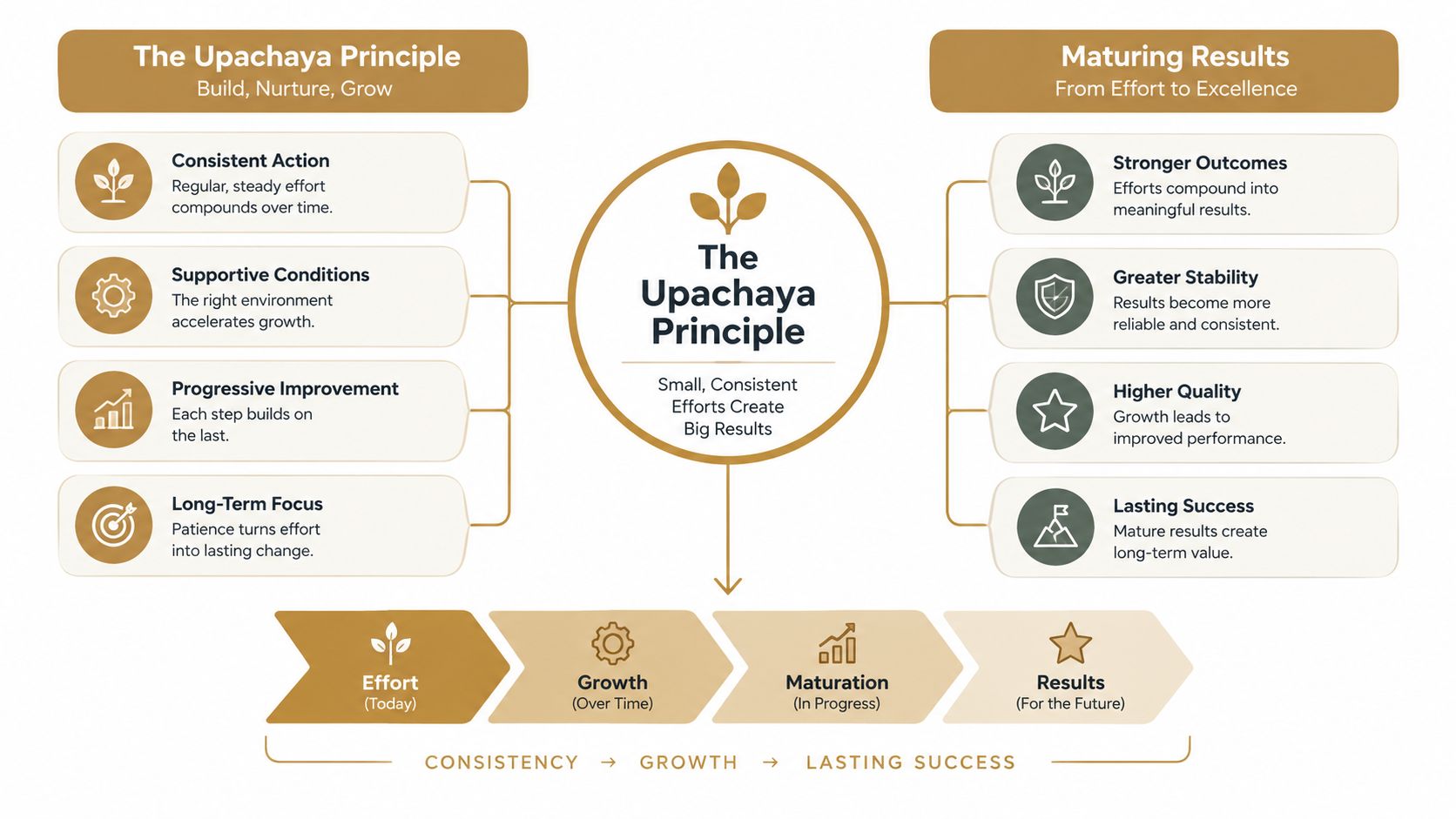
The 11th house is the Labha Bhava, the house of gains. In classical Parashari astrology, it covers income, profits, friendships, professional networks, fulfilled desires, and elder siblings. It also belongs to the four upachaya houses, alongside the 3rd, 6th, and 10th.
Upachaya means that results develop through effort and time. These houses are not judged as though every result must appear fully formed at birth. They describe areas where repeated action, competition, practice, and responsibility can change how the planet expresses itself. The 11th is traditionally considered the last and strongest of these growth-oriented houses.
Why Mars fits the house
Mars is fiery, decisive, and willing to enter competition. The 11th house supplies the field in which that force acts, including organizations, teams, commercial activity, social causes, and goal pursuit. This creates a practical combination. Mars doesn't merely describe having contacts. It can describe taking action through contacts, organizing people, pursuing opportunities, and pushing a group toward an outcome.
That action-oriented network may appear in engineering, operations, sport, activism, military environments, technical work, enterprise, or any setting where initiative and confrontation tolerance matter. The value lies less in having a large social circle than in building an active network that can move when a goal is clear.
The trade-off is equally important. Mars can make you direct and competitive, but the same quality can create friction when friends, colleagues, or elder siblings contest authority, money, or recognition. Traditional accounts therefore describe both gains and social conflict. A traditional discussion of Mars in the 11th as an upachaya placement emphasizes effort, maturation, and the need to qualify the result through dignity and chart support.
What maturation looks like in practice
Early experiences may include rivalry with peers, impatience with slow group decisions, or difficulty accepting someone else's leadership. With experience, those same traits can become negotiation strength, operational courage, and the ability to take responsibility when others hesitate. That shift isn't automatic. It depends on whether the chart gives Mars a workable sign, supportive connections, and periods in which its agenda can operate constructively.
A mature expression of Mars in the 11th is not “winning every argument.” It is learning which battles advance the objective, which alliances deserve investment, and when direct action will damage a relationship that still matters. The placement improves when force becomes strategy.
The classical principle is therefore conditional. Mars in the 11th may support gains because an upachaya house can channel a difficult or fiery planet into sustained effort. It doesn't promise instant wealth, and it doesn't erase the need to build skills, manage money, or maintain trust.
How Sign Dignity Changes the Outcome
A house placement shows the area of life under pressure. Sign dignity shows how well the planet can function there. This is why Mars in the 11th house cannot be interpreted identically across all charts.
Mars is traditionally exalted in Capricorn at 28 degrees and debilitated in Cancer at 28 degrees. These are peak dignity markers, not guarantees. The exact degree matters, but it's only one layer alongside ascendant, house ownership, conjunctions, aspects, divisional-chart placement, and active dasha. The classical study guide on Mars's dignity is useful for understanding why the sign changes the weighting of the placement.
Capricorn and Cancer as contrasting examples
Mars in Capricorn has a practical, structured expression. In the 11th house, that can support organized effort, measurable goals, disciplined competition, and the conversion of professional networks into tangible outcomes. The person may be better at managing a long project, defining roles, and using authority without wasting energy.
Mars in Cancer is traditionally debilitated. In the 11th, the same drive may become more emotionally reactive or inconsistent. Financial and social decisions may fluctuate with mood, perceived loyalty, or the need to protect a group. This does not mean the chart is doomed or that every result will be weak. It means the Mars agenda requires more careful judgment, especially when personal feelings and collective goals collide.
| Dignity State | Sign Example | Network and Income Expression |
|---|---|---|
| Exalted | Capricorn at 28 degrees | More capacity to organize effort, manage competition, and turn networks toward measurable goals, if the wider chart supports it |
| Debilitated | Cancer at 28 degrees | Greater risk of reactive decisions, uneven social alliances, or inconsistent financial outcomes, subject to cancellation and support factors |
| Neither peak condition | Other signs | Results must be judged through sign nature, rulership, aspects, conjunctions, varga support, and dasha |
What to check beyond the degree
Don't stop after identifying Capricorn or Cancer. Check who rules the sign Mars occupies, where that dispositor sits, and whether benefic or difficult planets aspect Mars. Examine Mars in divisional charts, especially when the question concerns partnership, profession, or long-term strength.
A dignified Mars can still produce conflict if heavily pressured. A debilitated Mars can still deliver useful results if supported by other chart factors or strengthened through relevant combinations. The correct conclusion is not “exalted equals success” or “debilitated equals failure.” It is that dignity changes Mars's capacity to deliver the 11th-house agenda, while the full chart determines how that capacity is used.
Connecting Gains to the Broader Chart Structure
The 11th house doesn't hold your entire financial or professional story. It describes gains, networks, and desire fulfillment, but those results depend on other houses that carry the process. A strong social network can open doors, yet it doesn't by itself show stored wealth, career durability, or the ability to manage disputes.
The four-house structure
Think of the relevant houses as a working system:
- The 11th house shows gains and access. Mars may make you proactive in pursuing income, allies, group influence, and long-term aims.
- The 2nd house shows stored wealth and resources. Income is not the same as retention. The 2nd house helps judge saving capacity, family resources, and how gains become material stability.
- The 10th house shows career capacity and public work. A wide network produces more when your professional structure can use it. Mars's connection to the 10th can make enterprise, operations, leadership, or competitive work more relevant.
- The 6th house shows service, competition, debts, and disputes. Mars can increase the ability to face rivals and difficult workloads, but it can also increase arguments when its force lacks restraint.
This is why “Mars brings money” is too crude. Mars in the 11th may increase initiative around opportunities, but the 2nd house must be examined for accumulation. The 10th must support sustained work. The 6th must show how you handle competition and disagreement.
Networks have costs
Mars can help you enter demanding environments and act when others hesitate. It may draw you toward technical groups, enterprise, activism, sport, operations, or other settings that reward decisive action. But an action-oriented network isn't always a peaceful one. You may attract capable allies who also have strong opinions, competing interests, and low tolerance for delay.
Elder siblings and colleagues require the same care. Traditional interpretations connect Mars in the 11th with possible friction in these relationships, particularly when money, authority, or recognition becomes contested. The result should be checked against aspects, conjunctions, and the relevant house lords rather than accepted as a fixed family outcome.
For another example of why a house placement must be read through wider chart connections, compare the broader house-based approach in this discussion of Ketu in the 11th house. The method matters more than the label.
A network can create access. Only the broader chart shows whether you can convert that access into stable work, retained resources, and relationships that survive disagreement.
Timing Your Networks and Income Windows
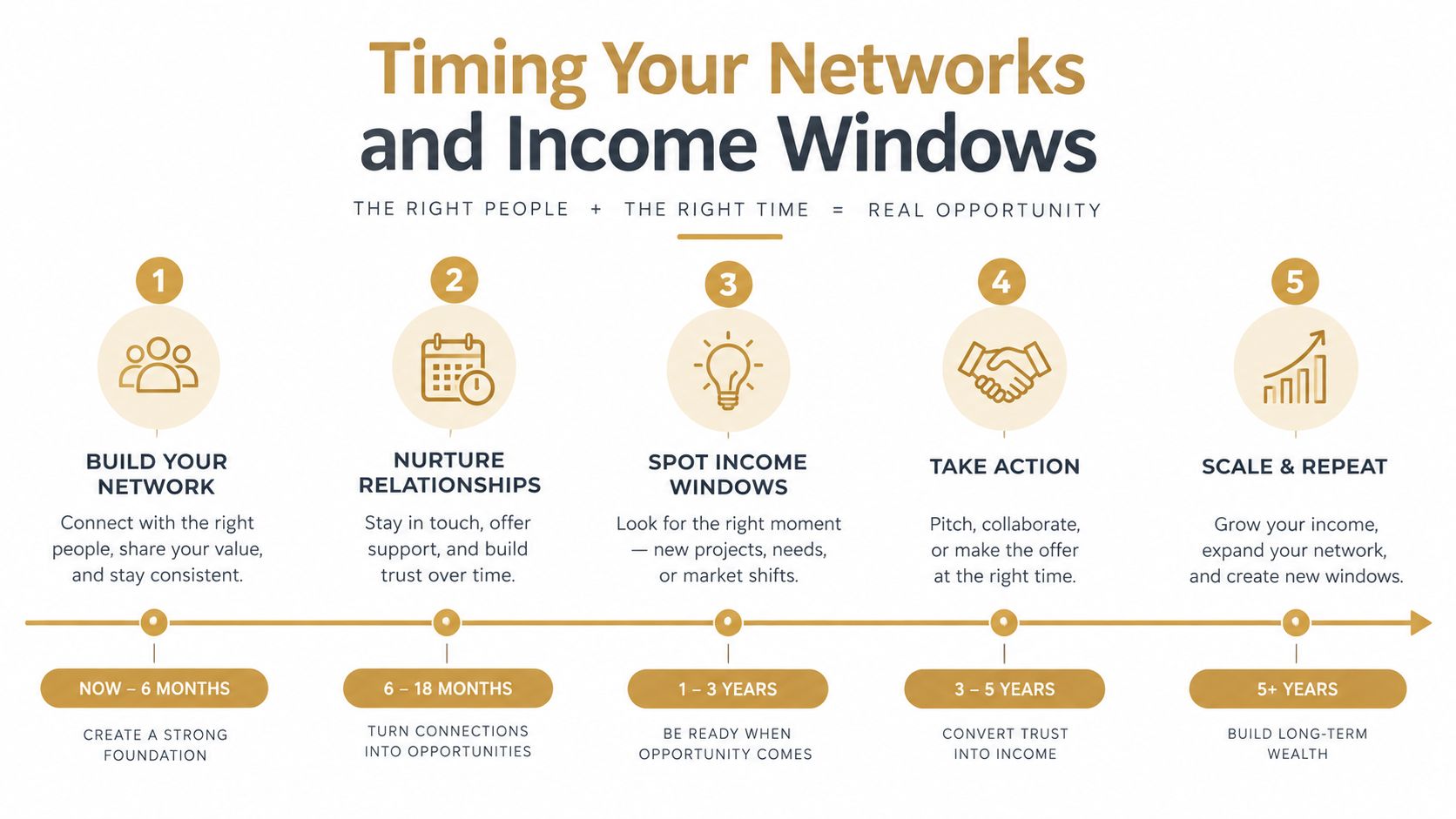
A capable Mars in the 11th house doesn't mean every period of life brings the same access to gains. Vedic astrology uses dasha, the planetary timing system, to identify when a chart's themes are more likely to become active. Transits then describe current planetary movement against the birth chart.
A practical timing sequence
Start with the periods most directly connected to Mars and the 11th house:
- Review Mars mahadasha or antardasha. These major and sub-periods can activate Mars's house placement, sign condition, rulership, and aspects.
- Check the 11th-house lord periods. The planet ruling the 11th can bring network, income, and goal-related matters into focus, even when Mars itself isn't the active planet.
- Examine connected house lords. Periods involving the 2nd, 6th, or 10th lords can change how gains are earned, retained, contested, or used.
- Add relevant transits. Gochara, or current planetary movement, can trigger a natal promise, but a transit shouldn't be treated as an isolated guarantee.
- Compare the timing with lived events. Look for specific windows involving changes in income, professional reach, team roles, competition, or sibling dynamics.
Varshaphala, the annual chart method, and Ashtakavarga, a system that helps assess transit support, can add detail. They don't replace the natal chart or dasha ladder. They help refine the question of when a theme may become more visible.
Use timing for reflection, not reckless action
A supportive period may be a reasonable time to review professional contacts, pursue a defined project, or clarify a group commitment. It isn't a reason to make financial, employment, or legal decisions without appropriate professional advice. Astrology can help you structure reflection around timing. It can't remove uncertainty from real-world choices.
For a technical overview of how dasha calculations fit into chart reading, see this dasha calculator explanation. The important point is simple: a natal placement describes potential themes, while dasha and transit analysis helps test when those themes are active.
Separating Symbolic Hypothesis from Empirical Certainty
Classical Jyotish gives Mars in the 11th a coherent symbolic interpretation. The 11th house relates to gains, allies, hopes, and social benefits. Mars contributes initiative, competition, and confrontation tolerance. Hellenistic astrology also treated the 11th house as the Good Daimon, a place associated with social favor, hopes, allies, and benefits.
This continuity is historically notable. Firmicus Maternus, writing the Mathesis around 334 CE, associated Mars in the 11th house with increased income and popularity. Vettius Valens, whose Anthologies date to approximately the 2nd century CE, treated malefics in the Good Daimon as less damaging than they could be elsewhere. The tradition therefore spans at least roughly 1,700 years, but that history doesn't establish a scientifically validated causal effect of planetary position on income or popularity. These historical details are discussed in this cross-tradition account of Mars in the 11th house.
A fair way to use the symbolism
Independent science coverage reports that astrology has no demonstrated scientific basis for explaining personality or life outcomes, including controlled testing in which astrologers performed no better than chance. At the same time, astrology can have cultural and reflective value by helping people organize meaning around their lives, even when predictive claims lack empirical support. The BBC Earth discussion of astrology and science presents that distinction clearly.
Treat Mars in the 11th as an interpretive hypothesis, not a certainty. Write down the specific claim, define the time window, and decide what observable event would support or weaken it. “Mars will make me successful” is too vague to test. “During a Mars-linked period, I may take on a competitive group role or pursue a new income channel” is more precise, while still remaining conditional.
For personal reflection and self-understanding, this approach is safer than fear or flattery. It also keeps astrology separate from professional financial, career, medical, relationship, or legal advice.
Diagnostic Questions to Validate Your Chart Reading
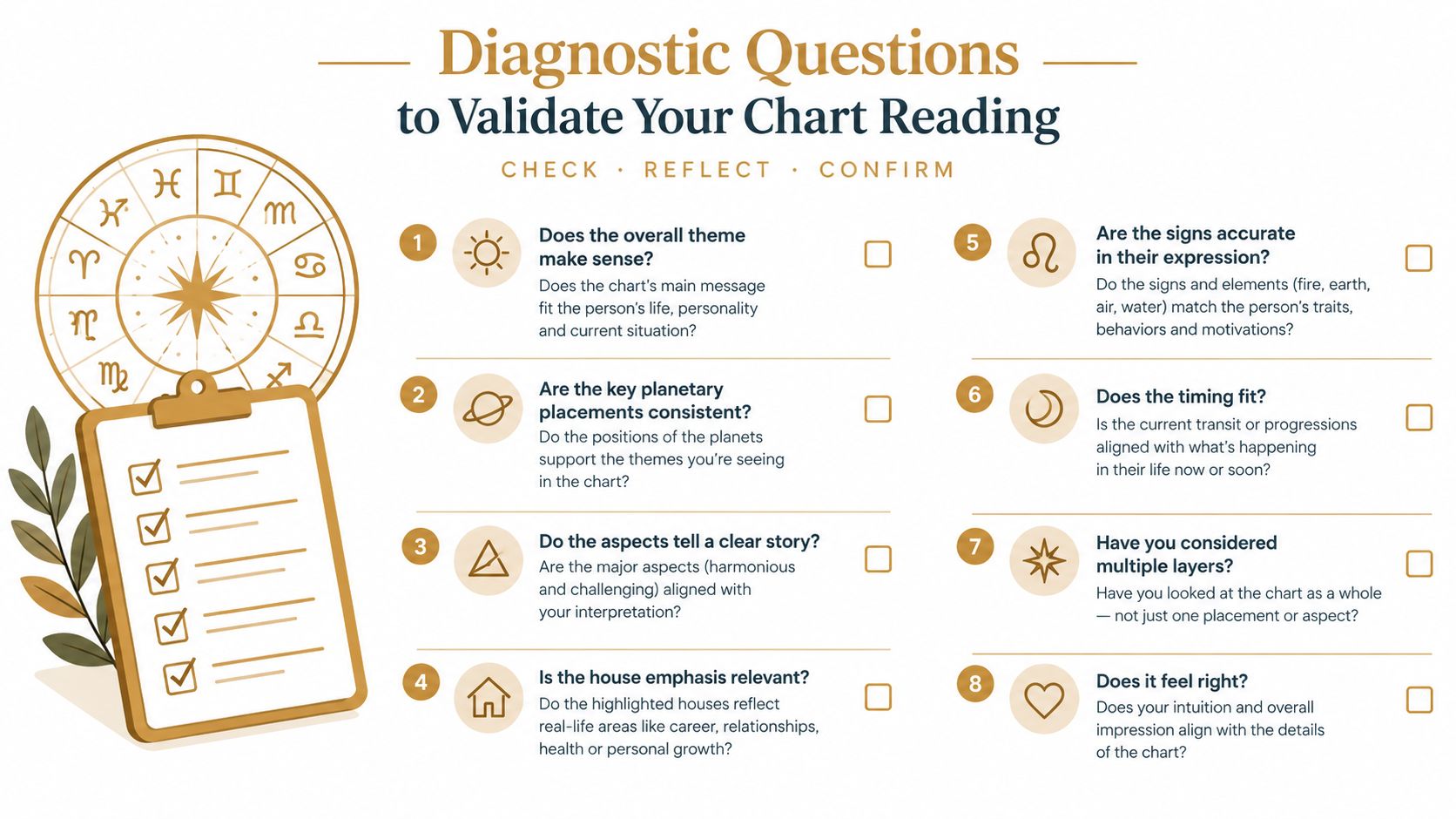
Before accepting a claim about Mars in the 11th house, test the chart against your own record. The aim isn't to force every event into an astrological story. It's to see whether the declared chart structure offers useful correspondence before you trust its forward-looking language.
Check the birth data first
A small change in birth time can alter house positions, divisional charts, and dasha calculations. Confirm the recorded time, place, and calendar details before evaluating the placement. Then identify the ayanamsha and compute method being used, because different settings can change chart output.
Use these questions as a disciplined starting point:
- Timing: Did a Mars mahadasha, antardasha, or relevant 11th-lord period coincide with a clear change in income, networks, group responsibility, or goal completion?
- Network quality: Do your important opportunities come through active organizations, technical environments, enterprise, sport, activism, or competitive work?
- Conflict pattern: During a specific period, did disputes with friends, colleagues, or an elder sibling involve authority, money, credit, or control?
- Career connection: Does the 10th house support the professional activity through which your network creates gains?
- Retention: Does the 2nd house support saving or preserving resources, or do gains tend to move quickly into expenses and obligations?
- Competition: When Mars was activated, did you handle demanding rivals and service conditions constructively, or did confrontation create avoidable losses?
- Dignity: Is Mars exalted in Capricorn, debilitated in Cancer, or operating under another sign condition that changes its capacity?
- Support: Do aspects, conjunctions, divisional charts, Shadbala, and Ashtakavarga strengthen or weaken the initial interpretation?
Keep the test specific
Record dates and events before reading a prediction. Note what changed, who was involved, and whether the outcome concerned income, professional reach, social conflict, or family dynamics. Don't count a vague feeling of ambition as proof of a financial result.
An honest reading may conclude that Mars in the 11th is relevant to your behavior but not sufficiently supported for a confident forecast. That's useful information. Anvaya's Pramāṇa process follows the same principle by asking chart-derived questions about lived events before adding forward claims to a persistent Samhita.
Anvaya computes a classical Vedic chart, checks its timing layers, and uses Pramāṇa to calibrate the reading against events you have experienced. If you want a chart-first view of your Mars in the 11th house, visit Anvaya and generate your Samhita.