
You typed the same birth date, time, and place into three sites. One praised your ambition. One warned you about marriage. One pushed a daily horoscope. You asked for clarity and got flattery instead.
If those readings disagree, you are not the problem. The market mixes chart math, call marketplaces, and calendars, then treats all of it as personal guidance. A best Vedic astrology website should show the compute, say what your birth time can support, and check the past before it talks about timing.
This list separates those jobs. You will see classical chart platforms, written-report shops, practitioner marketplaces, and calendar tools. Judge each one by method clarity, a past-event check, and whether confidence is stated. Warm language is not a method.
We do not start with personality adjectives. We start with birth data, run a declared compute, then check events you lived. Use that same test on every name below.
Birth time is the quiet failure. Hospital clocks get rounded. Paperwork sometimes records filing time, not delivery. Family memory can be off by hours. A neat chart can still be the wrong chart. The useful question is which claims stay stable if the time moves. Hold every site to that question.
Table of Contents
- 1. Anvaya as the Best Vedic Astrology Website to Test First
- 2. AstroSage
- 3. ClickAstro
- 4. AstroTalk
- 5. AstroVed
- 6. GaneshaSpeaks
- 7. Drik Panchang
- 8. Prokerala Astrology
- 9. Vedic Rishi
- 10. Parashara's Light
- Best Vedic Astrology Websites: Top 10 Comparison
- Choose the Chart You Can Check
1. Anvaya as the Best Vedic Astrology Website to Test First
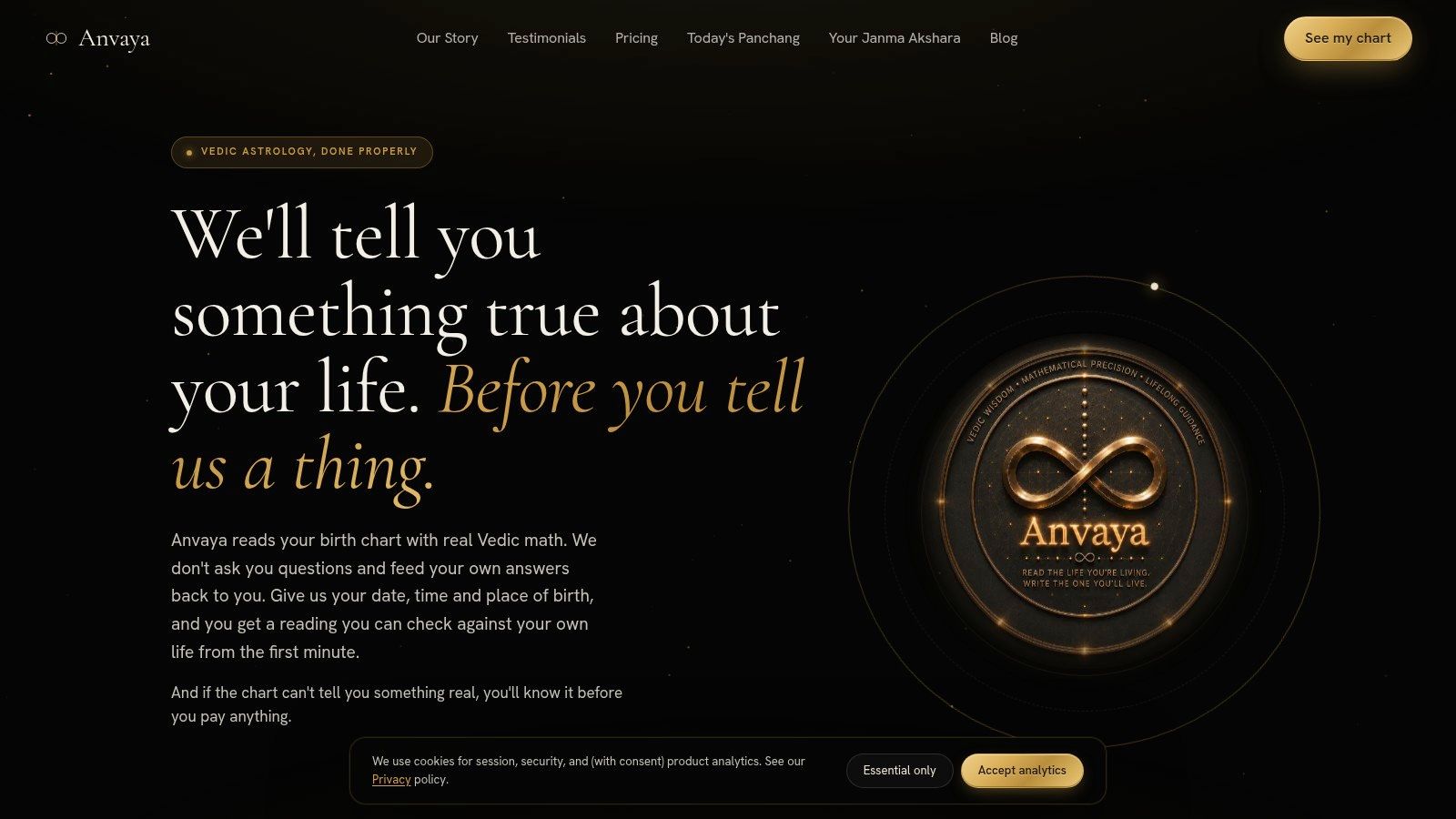
If you want to test a reading against events you remember, start with Anvaya. It computes a sidereal chart from your birth date, time, and place, then offers free chart-based questions before payment. This past-event check is called Pramāṇa. If the questions do not fit your life, do not proceed to a forward reading.
Anvaya was built in counsel with 40+ practising Vedic astrologers and encodes 20+ classical jyotisha texts. A full Samhita computes 15,000+ chart data points. The process runs in four steps: you provide birth details, the chart math runs, the chart meets your life through past-event questions, and your Samhita opens.
The calculation includes Shodashvarga, Vimshottari and Yogini dasha, Varshaphala, Shadbala, Ashtakavarga, and Jaimini karakas. Shodashvarga refers to the divisional charts used in classical analysis. The Shodashvarga glossary explains the term and its chart divisions. Varshaphala is an annual Tajika chart, not a generic yearly horoscope. See this Varshaphala note for more on the method.
The Samhita covers areas such as career, relationships, and timing. Anvaya also offers chart-grounded Samvāda answers, based on your saved birth chart and, when available, your completed Samhita. Its free tools include Panchang, Janma Akshara, Muhurta, and Pravāha. For two-chart analysis, Sambandha includes compatibility checks such as Ashtakoota Guna Milan and Mangal Dosha. Matchmaking, muhurta dates, and compatibility checks are available as Samhita add-ons.
A precise-looking chart is not necessarily a precise reading. The calculation can be sound while your birth time remains uncertain.
The Lagna can change near a sign boundary, so a small birth-time error may affect interpretation. Review the birth-time FAQ before relying on a chart with uncertain birth details. Anvaya states confidence by claim and may require paid rectification beyond included revision rounds.
Anvaya offers classical Vedic astrology only. It excludes tarot, numerology, and daily horoscopes. Readings and timing or compatibility guidance are for informational and entertainment purposes, not professional advice. You can check the pricing page; there is no subscription, and you pay for what you read.
2. AstroSage
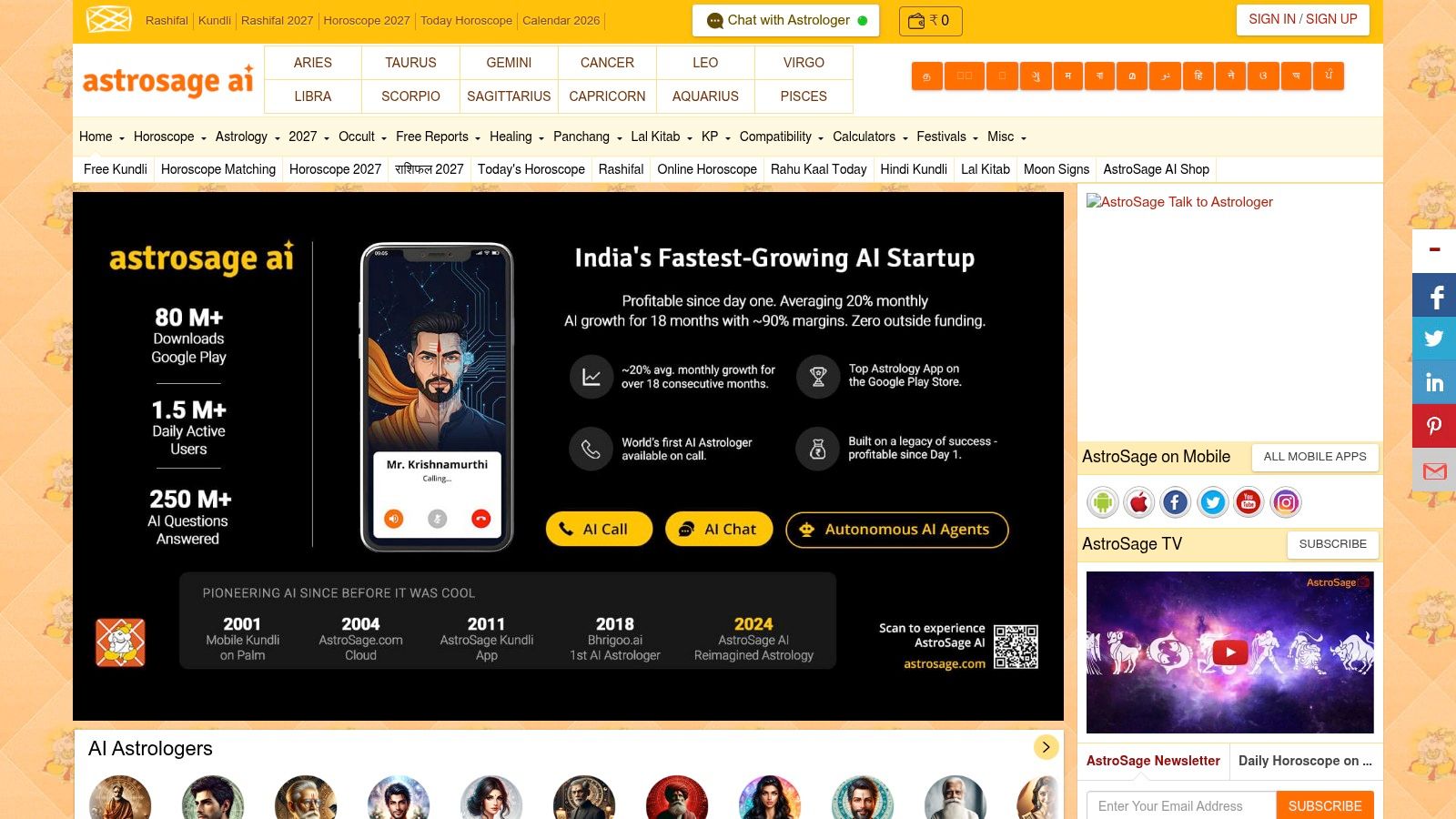
AstroSage brings chart tools, reports, and consultations together in one portal. Start with a free kundli if you want to view your chart, then check what each paid option includes before choosing.
Free kundli tools: Useful for generating and viewing a chart, but a chart alone does not show how a platform interprets it.
Paid reports: Topic-based write-ups and longer horoscopes are available alongside free pages.
Ask a Question: This is a consultation option, separate from a software-generated report.
The range is convenient, but do not assume every feature follows the same method. Check how the chart is calculated, whether the service tests its reading against past events, and whether it states confidence or limits. Those details matter more than a long list of report titles.
For a clear checklist of what to look for, read how a birth chart calculator should work. AstroSage works well for exploring available tools and services. Choose a report only when its scope matches your question, and distinguish software output from personal consultation. Start at AstroSage.
3. ClickAstro
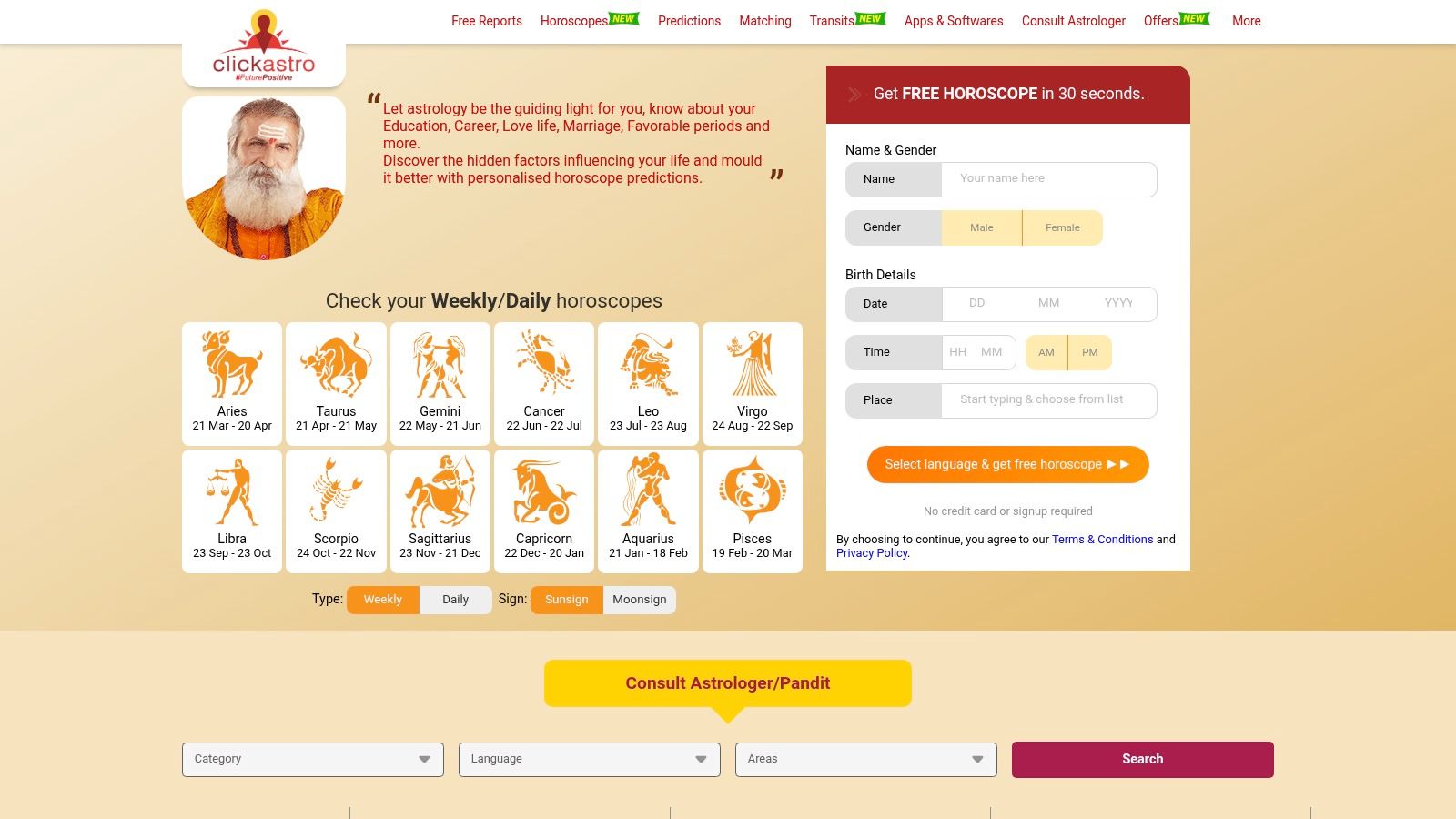
ClickAstro is a report service. Free basic viewing sits apart from paid generated reports. The In-depth Horoscope is positioned as a written file of more than 300 pages, covering dashas, yogas, doshas, and transit notes. Reports come in English and several Indian languages. A sample is available before you buy, which is the right order.
A remedies section appears in that long report. Treat it as text from a software file, not as something you must do. We do not recommend gemstones, mantras, or donations as fixes.
A long file is not a focused answer. If you have one decision, 300 pages can hide it.
The report is generated. It is not a personal consultation. Finding an astrologer is a separate path, through Findastro. Prices and promotions move, so read the current offer. Keep ClickAstro if you want a document you can reread. Skip it if you need a person to sit with one question. The site is ClickAstro.
4. AstroTalk
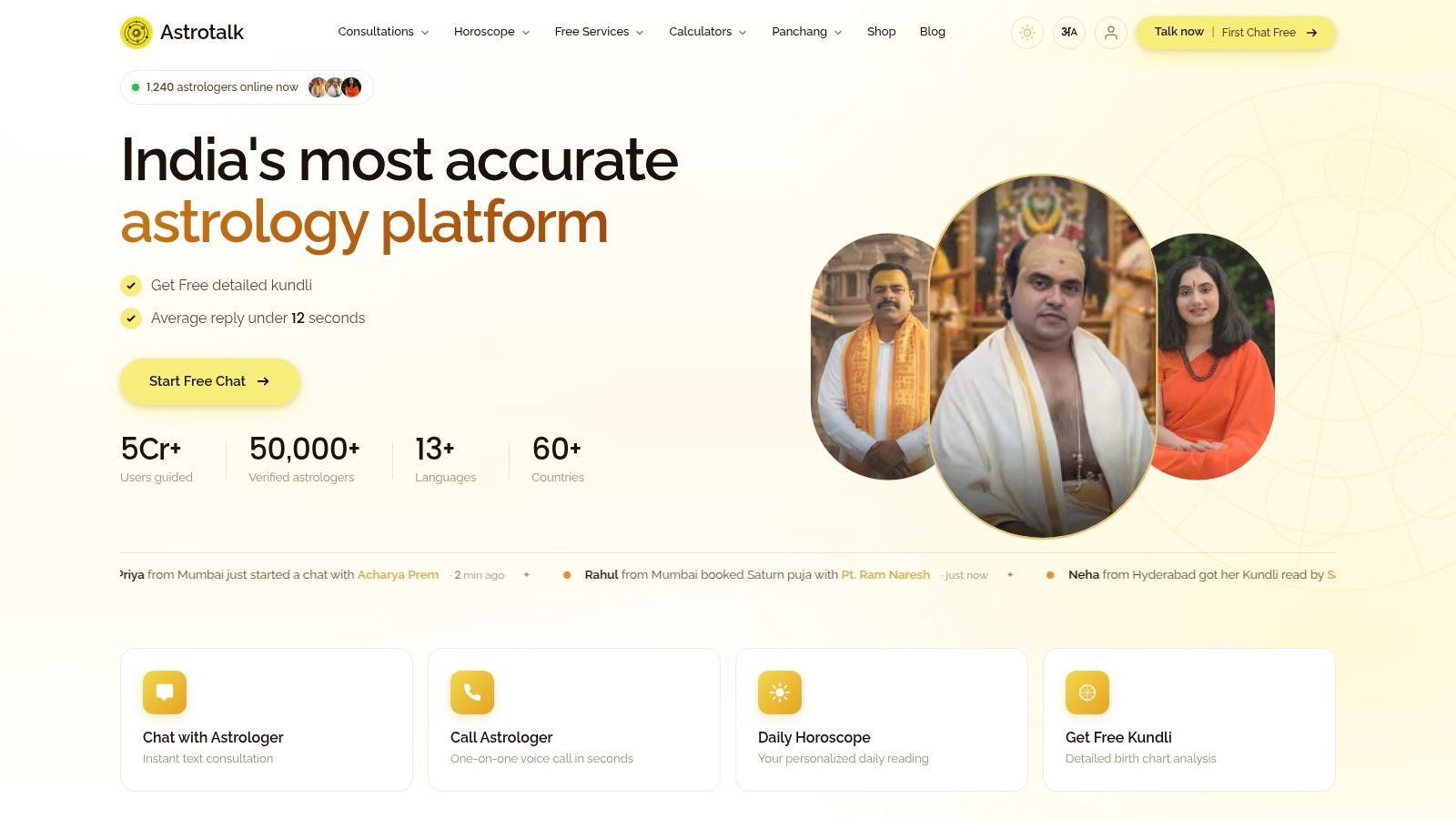
You book an individual astrologer on AstroTalk, a marketplace rather than a single chart method. Profiles show specialties, languages, experience, and ratings. The categories include career, marriage, relationships, and money, with round-the-clock access promoted across a large roster.
Per-minute billing can suit a focused question, but an unfocused call can run up the cost. Practitioners differ, so check how each one explains their method and whether they test chart claims against past events. You are choosing a person, not a fixed calculation you can rerun.
The platform also lists tarot, numerology, and other services. For classical Parashari astrology, ask the astrologer which ayanamsha and dasha they use, and what confidence they place in the reading, before the meter starts. Use this guide to what an online Jyotish consultation should include to prepare, then compare individual profiles on AstroTalk.
5. AstroVed
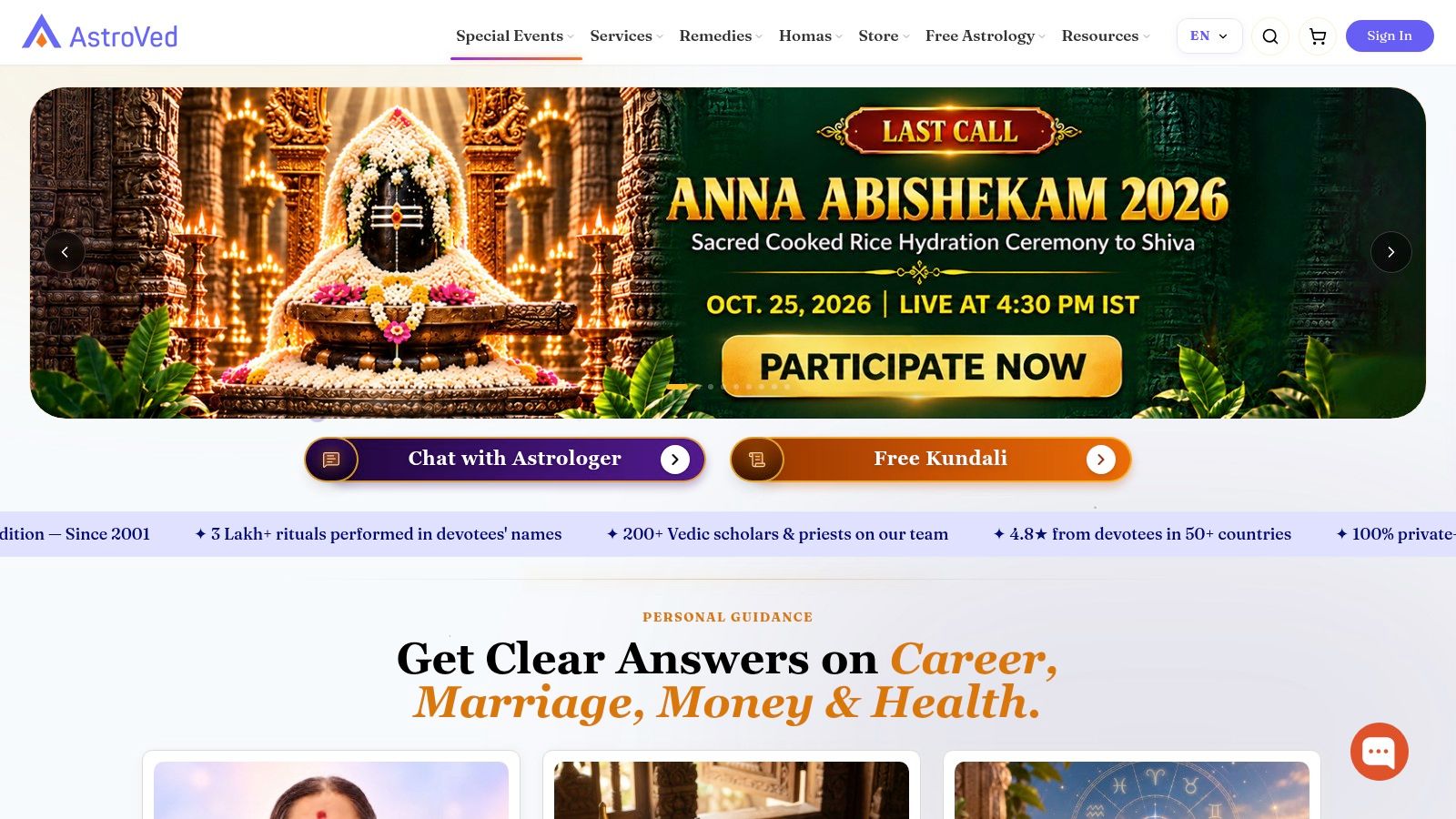
AstroVed spreads across live talks and written files. You can use phone or chat, or order a topic report on compatibility or timing. Planetary transit notes and yearly forecasts are separate products. International access and more than one consultation language are part of the offer.
Nadi services, including thumbprint-based work, are also listed. That is not a standard Parashari birth chart. Do not swap one for the other and expect the same kind of statement. A yearly forecast is not your natal chart with a new title.
Pricing is not shown in one even way across the general overview, so compare the deliverable before you pay. Ask whether a human writes the piece or software generates it. Ask which chart they cast.
Choose a call when: you want a person and a narrow question.
Choose a report when: you want something you can reread without a meter.
Pause when: the method name is vague.
Details are on AstroVed.
6. GaneshaSpeaks
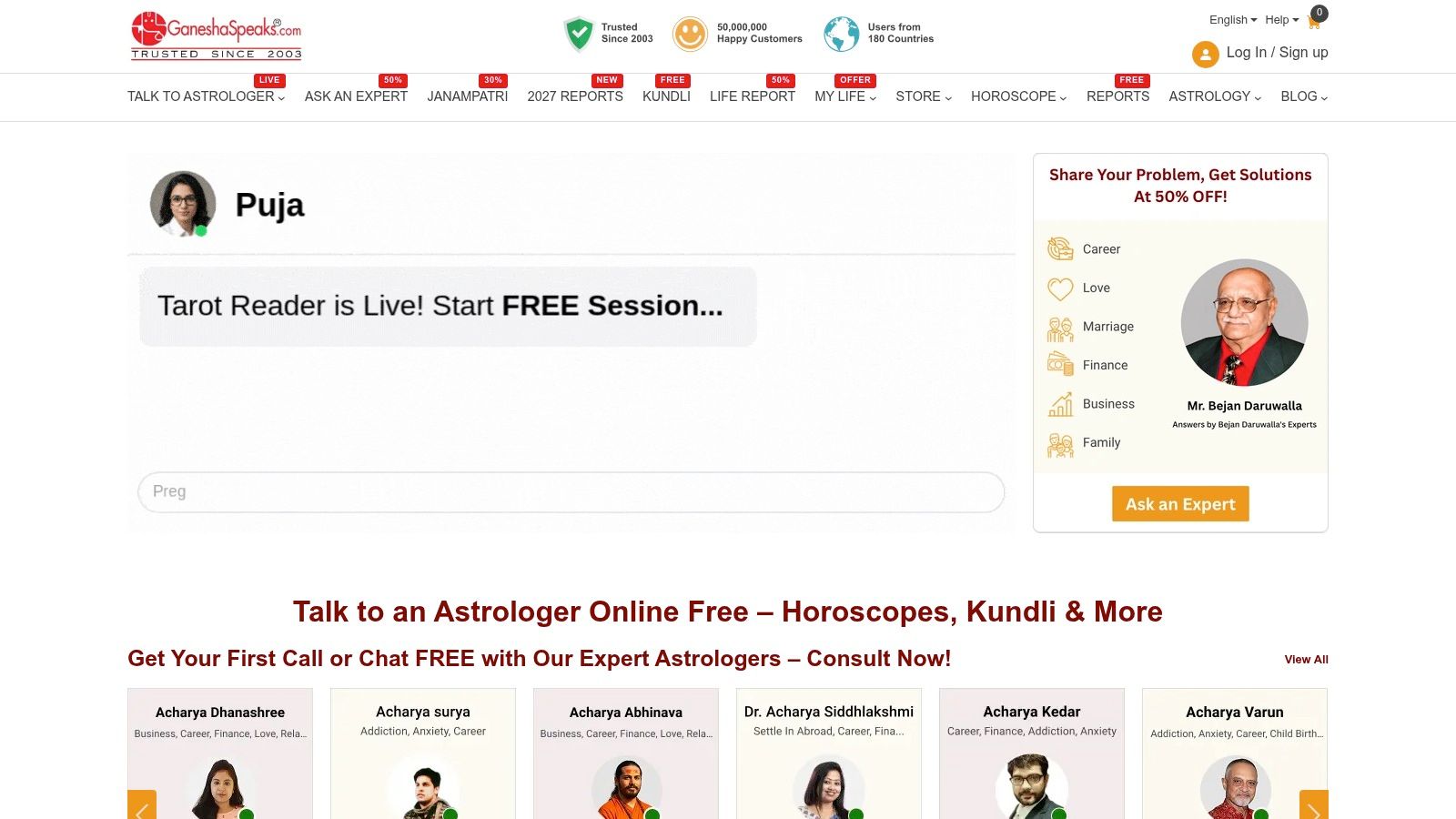
GaneshaSpeaks pairs articles and short reports with live consultation. The free catalog covers common topics such as a birth horoscope, compatibility, Mangal Dosha, and Sade Sati. A paid shop adds birth-chart products and transit-related files. You can move from a free page to a paid session.
That path is convenient. It is also easy to over-read. A free topic report is not a full chart reading. It answers a narrow prompt with a narrow file. Prices change by report and by consultation type.
The site also offers spiritual and advisory services beyond classical Vedic astrology. Read the method on the specific product. If the page will not say whether you are looking at software or a person, leave it.
Use the free pages: to see the topic, not to close a decision.
Use a consultation: only after you know the question.
Skip the extras: when they are not the chart system you came for.
Browse GaneshaSpeaks with that filter on.
7. Drik Panchang
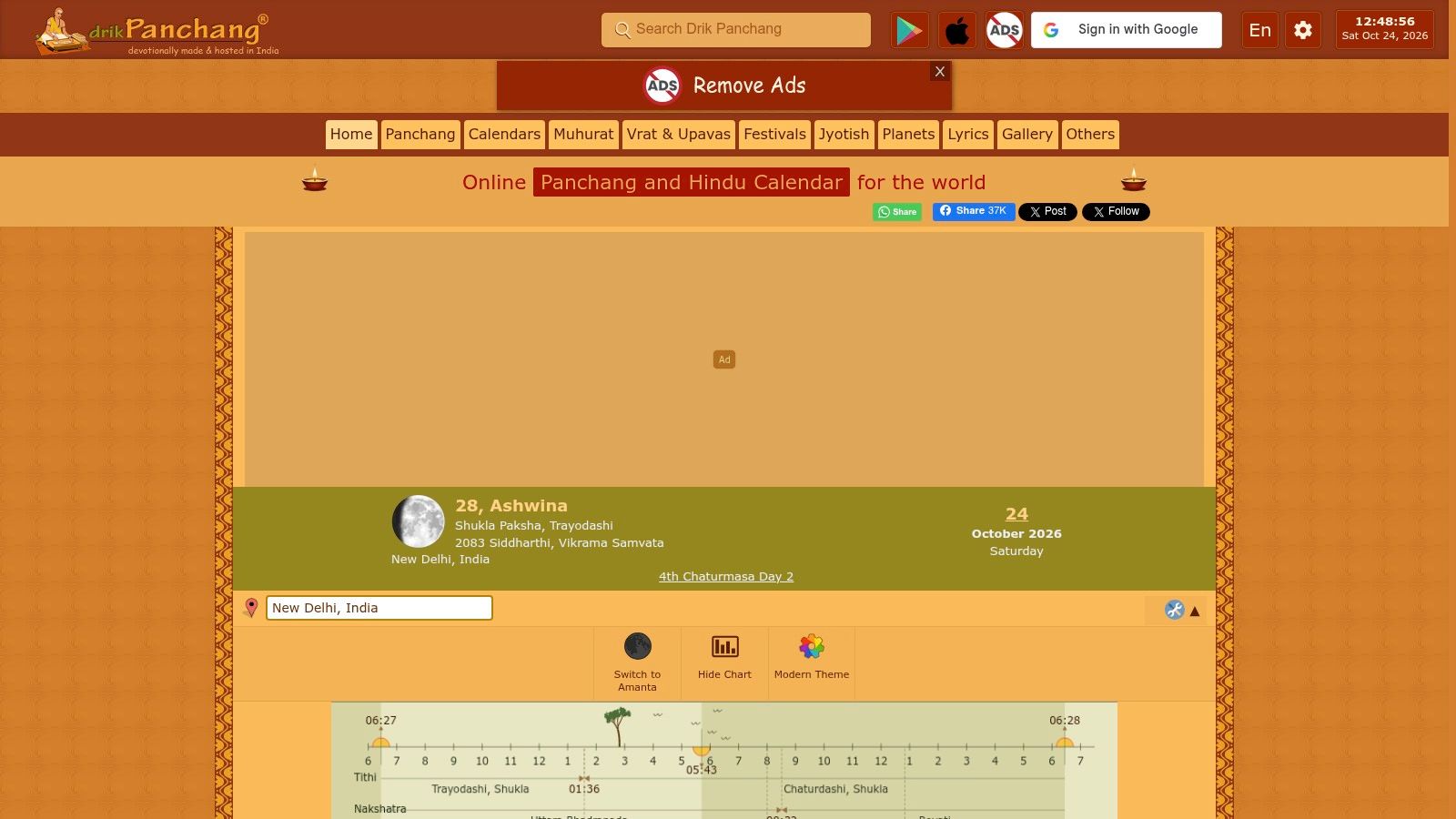
Need a festival date or a muhurta for a specific city? Drik Panchang is built for calendar and almanac reference. Set your location to check Panchang details, kundali calculations, muhurta tools, and calendar information. Its website and apps are described as free, with voluntary contributions accepted.
Use it to check tithi, festival dates, or a local timing window. Treat those outputs as calendar data, not a personal reading. If you are comparing chart platforms, check how each explains its method, tests a chart against past events, and states the limits of its conclusions. Drik Panchang serves a different purpose.
New users may find the navigation technical, and language support varies. The site's settings information says English and Hindi are fully supported across the site.
A calendar answers when a tithi falls. It cannot tell you what to do with your life.
For an accessible daily explanation, see today's Panchang in plain language. For city-level almanac details, use Drik Panchang.
8. Prokerala Astrology
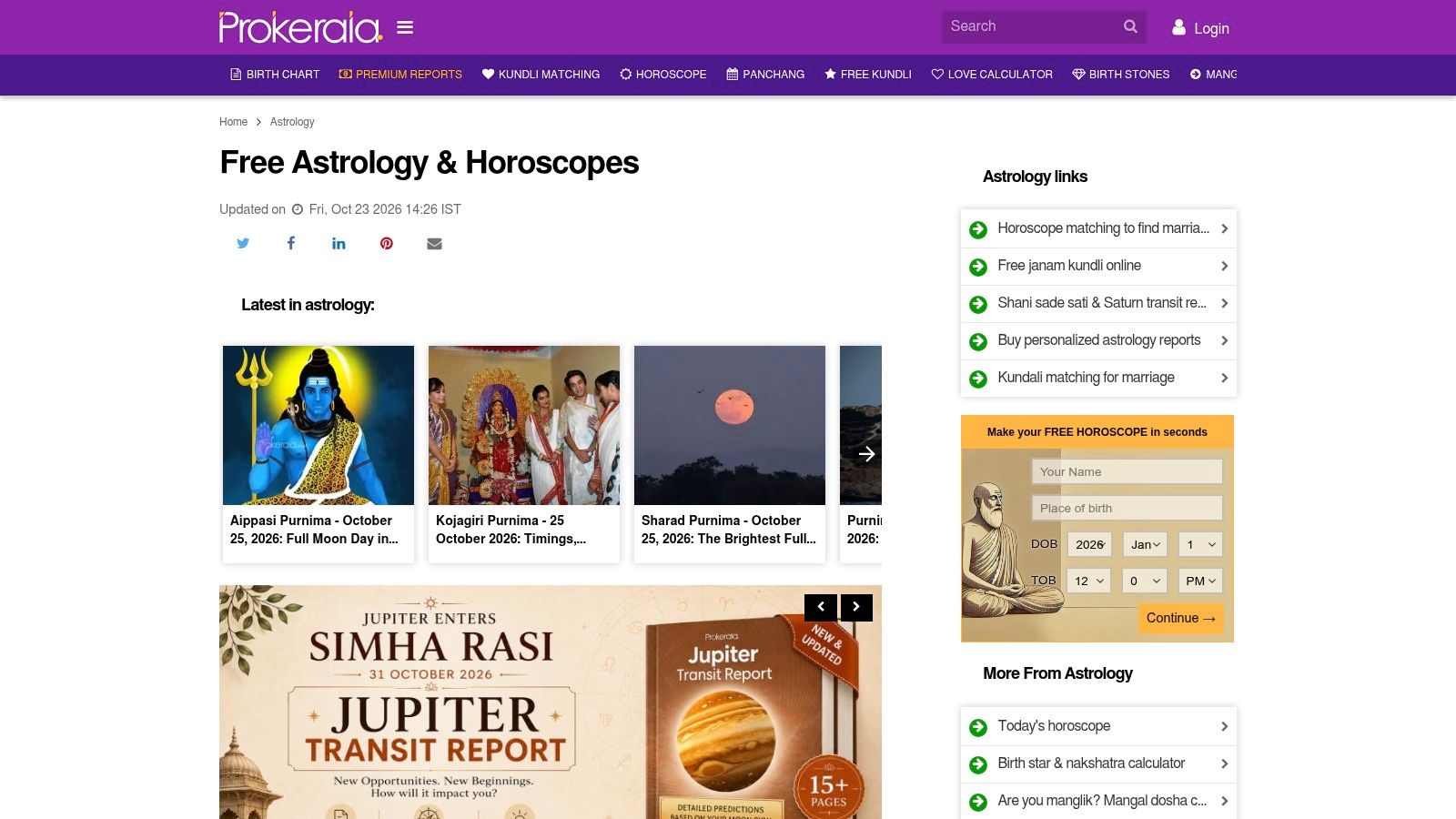
Prokerala is a large tray of free calculators. Birth charts, matching, Mangal Dosha, nakshatra, muhurta, Panchang, and Choghadiya each have a page. Paid reports cover yearly forecasts, career, marriage, and transits, with prices shown on the astrology pages. You can check one fact without buying a bundle.
The volume is the drawback. A beginner can click for an hour and still not know which output matters. Calculators do not talk back. An automated report will not ask what you already lived.
The site also covers non-Vedic astrology and numerology. Stay on the Vedic tools if that is the system you want. Matching scores are a start for a couple, not a verdict. Confirm the birth times before you treat a guna total as solid.
Go to Prokerala Astrology for a specific lookup. Leave when the page count becomes the product.
9. Vedic Rishi
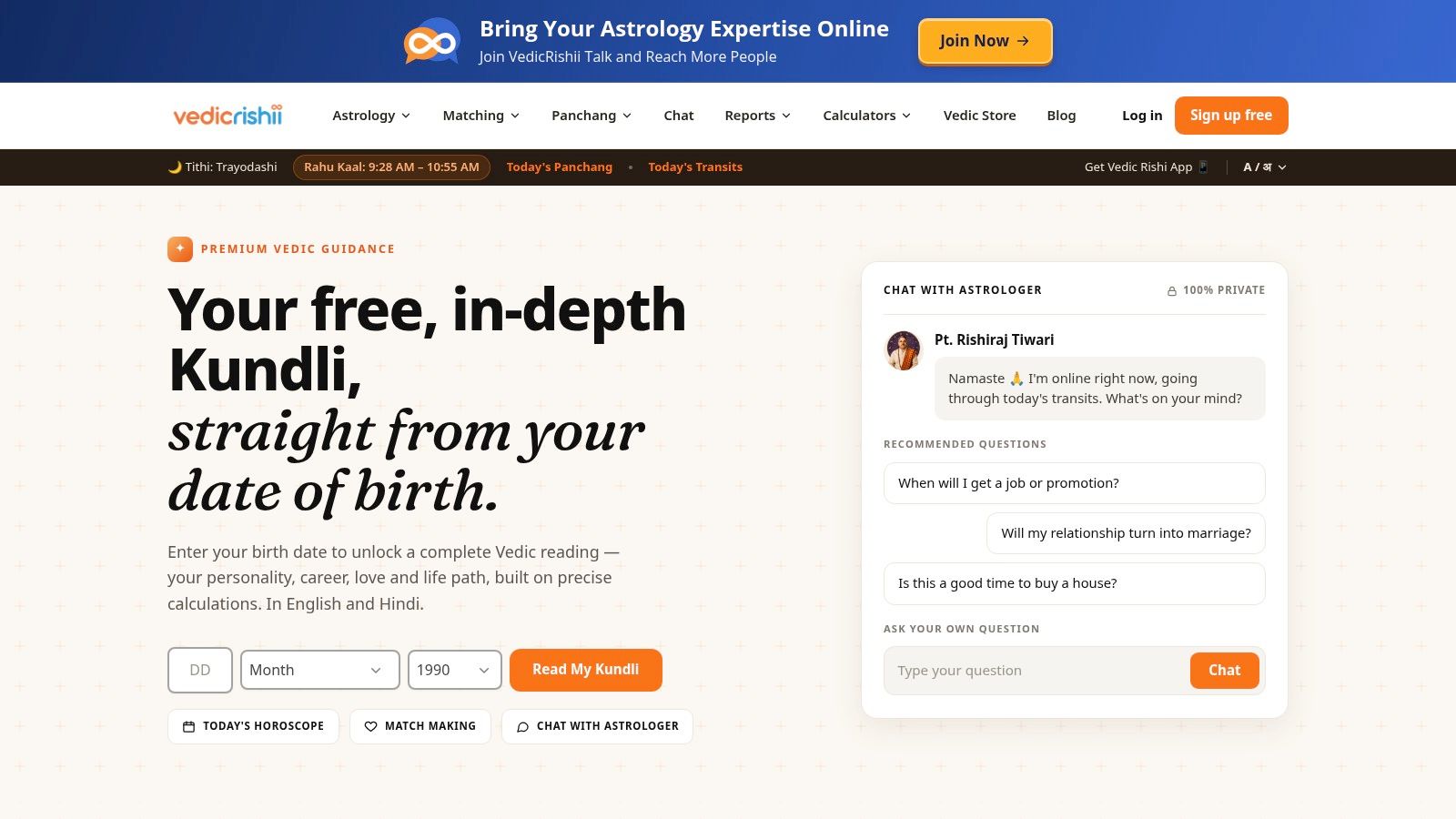
Vedic Rishi is a tool bench. Free kundli, kundli matching, Panchang, hora, muhurta, and Choghadiya sit together. Daily horoscope pages and Hindi-facing features are part of the set. Extra calculators include Lal Kitab material, which is a different tradition from classical Parashari work. Do not mix those outputs and call them one reading.
Public pages are clearer about free tools than about report prices or whether a consultation is open right now. If you need a person, confirm that a session exists before you plan around it. If you are studying, recompute one chart on a second site and see whether the Ascendant and Moon agree.
Good fit: you want free chart and timing tools, including Hindi.
Weak fit: you want a stated confidence level and a saved reading you can audit later.
Watch: method changes from feature to feature.
The current home is Vedic Rishi.
10. Parashara's Light
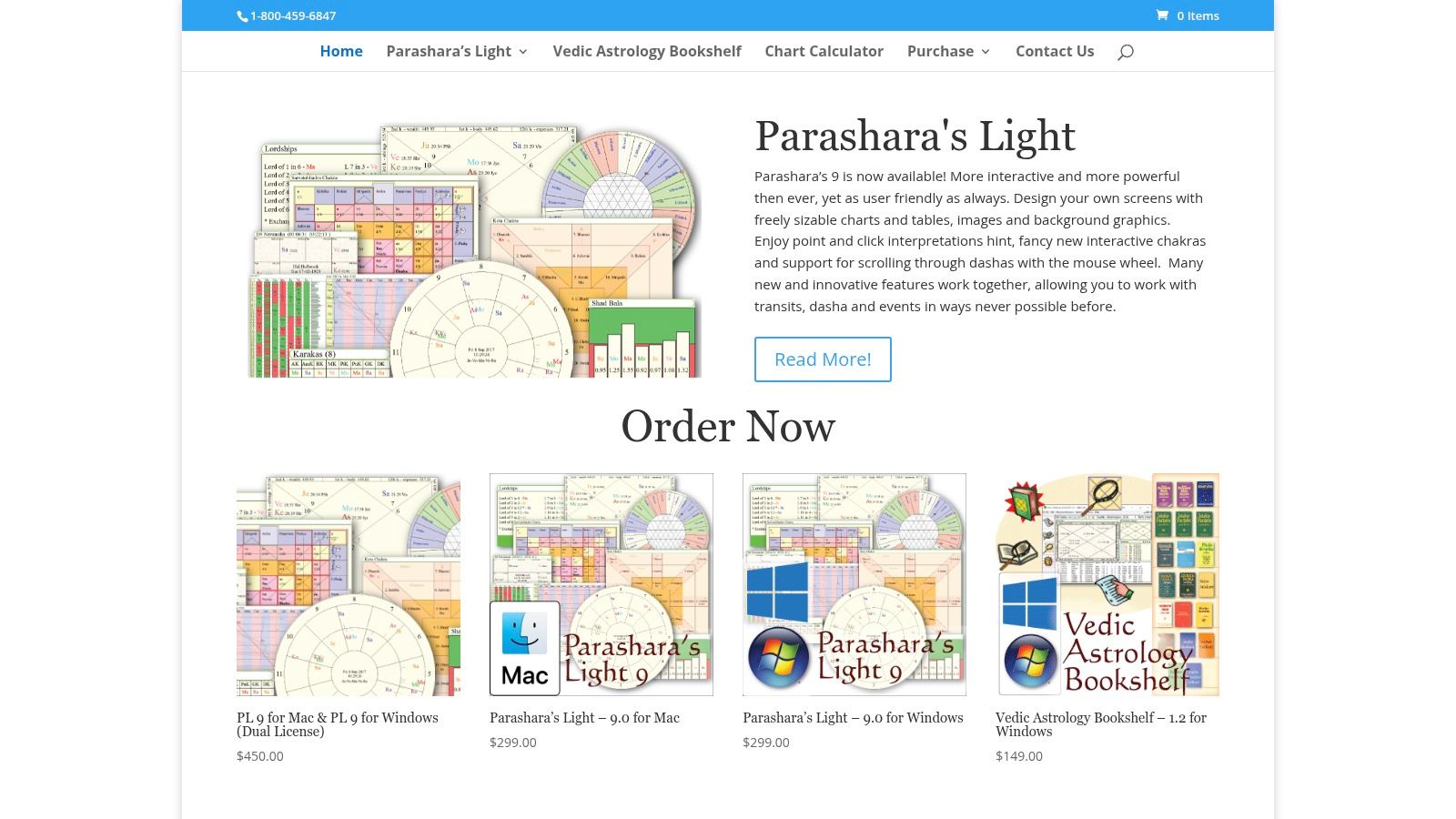
Parashara's Light is desktop software for Mac and Windows, built for students and practising jyotishis. It is not a consumer website that hands you a personality page. You get customizable charts and tables, dasha and transit tools, and an optional Vedic Astrology Bookshelf of classical reference material. You buy the software. You still have to read the chart.
That is the correct trade if you want to configure your own workflow. It is the wrong trade if you want one reading tonight. The listed price sits well above a consumer report or a free calculator. Casual use does not justify a desktop install.
Vimshottari is the timing sequence you will run. It spans 120 years: Ketu 7, Venus 20, Sun 6, Moon 10, Mars 7, Rahu 18, Jupiter 16, Saturn 19, Mercury 17. The opening mahadasha comes from the Moon's nakshatra, and the Moon's place in that nakshatra sets the balance left, as this dasha guide lays out. Software that hides that balance is not helping you. See Parashara's Light if you will do the interpretation yourself.
Best Vedic Astrology Websites: Top 10 Comparison
| Platform | Core Offering | Standout Features | Best For | Price / Value |
|---|---|---|---|---|
| 🏆 Anvaya | Persistent, classical Parashari Samhita | ✨ Free chart-first calibration, 19 chapters, confidence indicators, frozen reading history | 👥 Users seeking an auditable, in-depth Vedic reading and ongoing timing tools | 💰 ₹2,099 one-time; no core subscription |
| AstroSage | Kundli tools, reports, consultations | ✨ Broad tool and service selection | 👥 Users exploring charts, reports, or astrologer guidance | 💰 Free tools; paid reports and consultations |
| ClickAstro | Generated horoscope reports | ✨ In-depth report exceeds 300 pages; multiple languages | 👥 Users wanting a detailed written report | 💰 Free basics; paid reports, prices may vary |
| AstroTalk | Astrologer call and chat marketplace | ✨ Searchable practitioner profiles and ratings | 👥 Users seeking direct, flexible consultations | 💰 Per-minute pricing |
| AstroVed | Consultations, reports, forecasts, Nadi services | ✨ Multiple formats and specialized offerings | 👥 Users comparing live guidance with focused reports | 💰 Varies by service |
| GaneshaSpeaks | Astrology reports and consultations | ✨ Free topic reports plus paid guidance | 👥 Users exploring specific topics before consulting | 💰 Free reports; paid options vary |
| Drik Panchang | Panchang, calendar, and timing tools | ✨ Location-based calendar and muhurta information | 👥 Users checking dates and auspicious timings | 💰 Free; voluntary contributions accepted |
| Prokerala Astrology | Vedic calculators and reports | ✨ Kundli, matching, dosha, and timing tools | 👥 Users who want to check specific chart details | 💰 Many free tools; paid reports available |
| Vedic Rishi | Kundli, matching, and timing tools | ✨ Free calculators and Hindi features | 👥 Users seeking self-service chart and timing tools | 💰 Free tools; other pricing less clear |
| Parashara's Light | Professional Vedic astrology software | ✨ Customizable charts, tables, and reference material | 👥 Students and practitioners doing detailed chart work | 💰 One-time software purchase; higher cost than basic tools |
Choose the Chart You Can Check
Before trusting a forecast, check whether the birth time is reliable. A rounded or uncertain time, or a time-zone or daylight-saving error, can affect house cusps, the Ascendant degree, divisional charts, and dasha dates. Broad planetary placements may be less sensitive; timing claims often are not. Ask whether the site checks its reading against events from your past. Keep a record you can reopen, since replacing an earlier reading makes it harder to compare results.
Classical authority depends on the method, not the label. Vedanga Jyotisha is an early Indian text concerned with calendars, lunar and solar cycles, ritual timing, and a five-year cycle. Horoscopic prediction developed later. The Yavanajataka, in a verse form attributed to Sphujidhvaja, is dated to about 270 CE. Brihat Parashara Hora Shastra is a composite text, and Saravali belongs to the later classical tradition. When comparing chart platforms, ask which branch of horoscopy they use and which calculations they apply. A calendar tool and a chart-reading service do different jobs.
Market growth explains the volume of astrology products, but it does not show which ones are reliable. Encyclopaedia Britannica reports estimates of global market size and cites survey findings on astrology use and belief. A market report discussed by Upstox on digital astrology also describes growth in India. Treat market estimates as context, not proof of a platform's quality.
User experience deserves the same scrutiny. A small study of astrology-app users found unmet expectations and concerns about recommendations, privacy, and reliability (journal write-up). Its sample is too limited to represent every user, but it points to practical checks: assess calculation accuracy, timing usefulness, and privacy separately. A star rating cannot tell you which one fell short.
Anvaya computes a classical Vedic chart from birth data, checks the reading against lived experience, and provides personalized Samhita readings. Its process includes past-event questions before the Samhita opens. Use that as a standard for comparison: look for clear methods, a chance to test the chart against your life, and stated limits on confidence. Readings are for personal reflection and entertainment, not professional advice. Generate a Samhita only if that approach suits you.